

Let’s be honest — moving is one of life’s most stressful events. In fact, studies consistently rank it alongside divorce and job loss as a top life stressor. But here’s the thing: most of that stress is avoidable. The difference between a chaotic move and a smooth one almost always comes down to planning, the right tools, and knowing who to trust with your belongings.
Whether you’re moving across town or across the country, this guide walks you through every stage of the process — from your very first “okay, we’re doing this” moment to the day you finally unpack that last box. We’ll cover how to plan your timeline, pack like a pro, find reliable movers, and settle in without losing your mind. And if you’re wondering how technology like moving lead generation platforms fits into all of this — we’ll explain that too.
Ready? Let’s make your next move your best one yet.
Step 1: Plan Your Move Early — The Earlier, the Better
If there’s one piece of advice that will save you the most time, money, and headaches, it’s this: start planning earlier than you think you need to. Most people underestimate how many moving parts are involved in a relocation, and that underestimation is exactly what leads to chaos on moving day. Aim to start your planning at least 8–12 weeks before your target move date for long-distance moves, or 4–6 weeks for local ones.
Begin by creating a simple moving timeline — a week-by-week checklist of tasks that need to be completed. This might include researching and booking movers, gathering packing supplies, notifying your landlord or filing change-of-address forms, and scheduling utility transfers at your new home. Breaking the move into smaller, weekly tasks makes it feel manageable rather than overwhelming, and it ensures nothing falls through the cracks at the last minute.
Budgeting is another critical early step that people often skip. Moving costs can add up faster than expected — between mover fees, packing materials, travel costs, and potential storage, you’ll want a clear picture of what you’re working with. Build in a 10–15% buffer for unexpected expenses, because there are almost always a few surprises along the way.
One tool that makes the early planning phase significantly easier is a Moving Leads Generation Platform. Rather than spending hours Googling movers and sending individual inquiry emails, these platforms connect you directly with verified, local moving companies — often within minutes. It’s the kind of efficiency that can turn a half-day research task into a 15-minute job

📋 Early Planning Checklist
- 📅 Set your move date — and commit to it early
- 🗂️ Create a week-by-week moving timeline
- 💰 Set a realistic moving budget with a contingency buffer
- 🚚 Research and book movers at least 4–6 weeks out
- 📬 Notify utilities, bank, employer, and USPS of your new address
- 📦 Start sourcing packing materials (boxes, tape, bubble wrap)
Step 2: Declutter Before You Pack — Don't Move What You Don't Need
Here’s a question worth asking before you tape up a single box: Do I actually want this in my new home? Moving is one of the best opportunities you’ll ever have to reset — to let go of the things that have been cluttering your space and your life. And the more you declutter before packing, the less you have to pack, transport, and unpack. That means less time, less effort, and potentially lower moving costs.
Go room by room and sort everything into four categories: keep, donate, sell, and discard. Be ruthless. If you haven’t used something in a year, chances are you won’t miss it. Clothes that no longer fit, duplicate kitchen gadgets, old furniture that won’t suit your new space — these are all candidates for the donate or sell pile. Facebook Marketplace and local buy-sell groups are great for turning unwanted items into a little extra moving cash.
Don’t forget about the less glamorous stuff: old paperwork, expired medications, broken electronics, and those mystery cables at the bottom of your junk drawer. These are the things that tend to get tossed into boxes “for later” and end up cluttering your new home from day one. Handle them before the move and you’ll thank yourself later.
Decluttering also has a practical benefit that’s easy to overlook: it makes packing dramatically faster. When everything you own has a purpose and a place, packing becomes a straightforward sorting exercise rather than a stressful archaeology dig. For more on how structured systems improve operational efficiency — a principle that applies equally to moving and business — check out how Ping Post Software streamlines lead distribution for service businesses.
Decluttering also makes unpacking easier and helps you start fresh in your new home. Donating, selling, or recycling unused items can simplify the process and create a more organized living space. A clean and organized move leads to a more comfortable transition.
🗑️ Decluttering Tips
- 🗂️ Sort by category, not by room (Marie Kondo method works well here)
- 🎁 Donate usable items to local shelters, charities, or thrift stores
- 💰 Sell valuables on Facebook Marketplace, eBay, or at a garage sale
- ♻️ Dispose responsibly — e-waste, old paint, and chemicals need special handling
- 📄 Shred old documents — don’t move sensitive paperwork you no longer need

Step 3: Pack Smart — Label Everything Like You'll Need to Find It at Midnight
Packing is where most moves go wrong. People underestimate how long it takes, run out of boxes halfway through, and end up throwing random items together in unlabeled bags. Then on moving day, nothing can be found, fragile items arrive broken, and the kitchen is a mystery for weeks. Sound familiar? Let’s fix that.
Start packing at least 3–4 weeks before your move date, beginning with items you use least often — seasonal decorations, books, out-of-season clothes, and spare linens. Work your way toward daily-use items as moving day approaches, and leave your essentials (toiletries, a couple of outfits, chargers, medications, important documents) completely unpacked until the very last day. Pack these in a clearly marked “Open First” bag or box that travels with you — not on the truck.
Quality materials make a real difference. Invest in proper double-walled moving boxes, not the flimsy ones you grabbed from behind the grocery store. Use packing paper or bubble wrap for fragile items, and fill empty space in boxes with towels or clothing to prevent shifting. A roll of stretch wrap is invaluable for bundling furniture legs, protecting drawers, and keeping cabinet doors closed during transit.
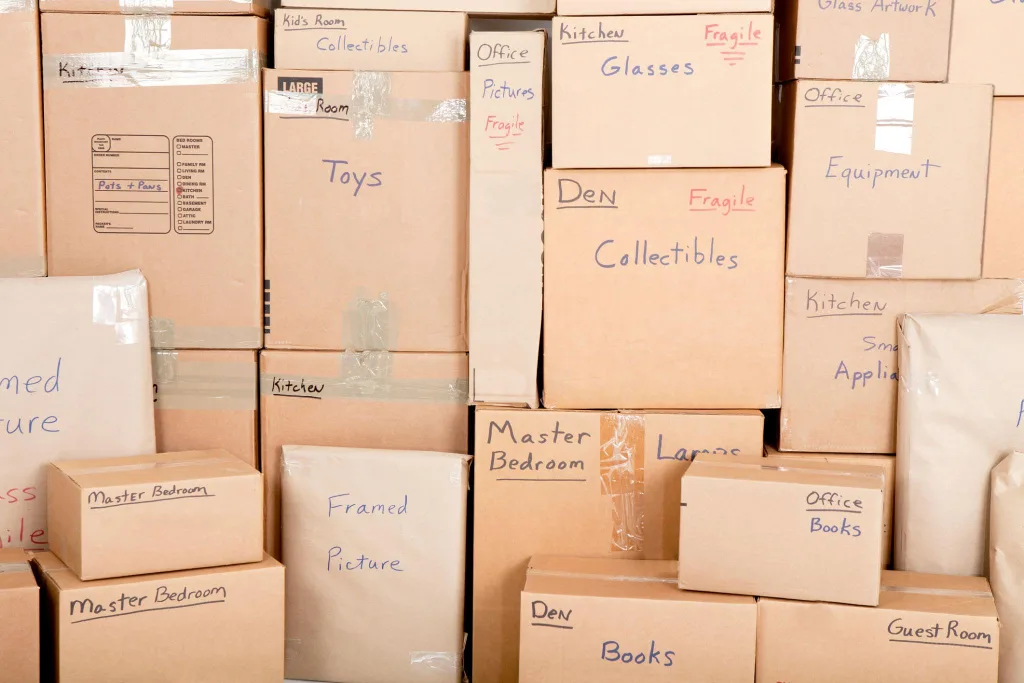
Labeling is non-negotiable. Write the destination room and a brief contents description on every box — for example, “Kitchen – Pots, Pans & Baking Sheets” rather than just “Kitchen.” This makes unpacking dramatically faster and helps movers place boxes in the right rooms without having to ask. Color-coded labels or tape by room (blue for bedroom, red for kitchen, etc.) is an extra touch that pays off in spades on moving day.
Using a Lead Distribution System alongside a reliable mover helps ensure your logistics — from pickup to delivery — are coordinated seamlessly, so your carefully packed boxes actually end up where they’re supposed to.
Smart packing reduces the risk of damage and makes the moving process more efficient. Keeping essential items separate ensures that you have immediate access to necessities when you arrive at your new home. Proper labeling also helps movers place boxes in the correct rooms.
📦 Packing Tips
- 📦 Use sturdy, double-walled boxes — cheap boxes collapse under weight
- 🏷️ Label every box with room + contents description
- 🧴 Wrap fragile items individually in packing paper or bubble wrap
- 🎒 Pack an “Open First” essentials bag with overnight necessities
- 📏 Don’t overpack boxes — keep them under 50 lbs for safe lifting
- 🪑 Disassemble large furniture and bag all hardware with labels
Step 4: How to Find and Hire Reliable Movers (Without Getting Burned)
Hiring the wrong moving company is one of the most common — and costly — mistakes people make during a relocation. From hidden fees and damaged belongings to outright scams where movers hold your stuff hostage until you pay more, the horror stories are real. But with a little due diligence and the right tools, finding a trustworthy mover is completely doable.
Start by getting at least three written quotes. Be wary of any company that gives you a price over the phone without asking detailed questions about your inventory, or that quotes suspiciously low compared to everyone else. Reputable movers will want to do an in-home or video survey before giving you a binding estimate. Always ask whether the quote is binding or non-binding — a binding estimate protects you from surprise charges on moving day.
Verify every company’s credentials before you sign anything. All interstate movers in the US are required to have a USDOT number, which you can check for free on the FMCSA website. Look up reviews on Google, the Better Business Bureau, and moving-specific review sites. And always read the fine print on your moving contract — understand what is and isn’t covered in their liability policy.
The fastest and safest way to find vetted movers is through a platform like Ping Tree Systems’ Moving Leads Generation Platform. These systems pre-screen service providers and match you with licensed, insured movers based on your specific needs — location, move size, timeline, and budget. It eliminates a significant amount of the research legwork and greatly reduces the risk of landing with an unscrupulous company.
For a deeper look at how lead matching technology works in the moving and home services industries, read our ping post explainer — it breaks down exactly how providers get matched with the right customers at the right time.
Researching reviews, comparing quotes, and verifying credentials can help you select the right moving company. Professional movers bring expertise, equipment, and experience that simplify the entire process.
✅ Hiring Tips
- ⭐ Read reviews on Google, BBB, and Yelp before shortlisting
- 💰 Get 3+ written quotes — never settle for a verbal estimate
- 📄 Verify USDOT license on the FMCSA website (fmcsa.dot.gov)
- 🔒 Ask for a binding estimate to avoid surprise fees
- 📋 Read the contract carefully — especially liability and insurance terms
- 🚫 Avoid large upfront deposits — reputable movers charge on delivery

Step 5: Settle Into Your New Home Like You Mean It
The boxes are in. The movers have left. And now you’re standing in the middle of your new home surrounded by a mountain of cardboard, wondering where on earth to start. This stage — the settling-in phase — is where a lot of people hit a wall. After weeks of planning and moving day adrenaline, the unpacking stretch can feel overwhelming. But with a smart approach, you can be comfortable and functional within a few days.
Start with the rooms you need most urgently: the bedroom and the bathroom. Getting your bed made and your bathroom stocked means you can sleep comfortably and start your morning routine on day one — a small thing that makes a huge psychological difference. The kitchen is next, since being able to cook basic meals saves money and keeps things feeling normal. Resist the urge to unpack everything at once; a systematic, room-by-room approach is far less stressful than opening every box simultaneously.
Once the essentials are sorted, take a little time to explore your new neighborhood. Find your nearest grocery store, pharmacy, and coffee shop. Introduce yourself to a neighbor. Walk around the block. These small actions help your brain shift from “I’m in a strange place” to “I live here now” — and that transition matters more than you might expect for your overall wellbeing during the move.
Don’t forget the practical admin tasks: confirm that all utilities are active, update your address with your bank, employer, and any subscriptions, and register your vehicle and update your driver’s license if you’ve moved to a new state. Technology platforms like Ping Tree Systems are a good reminder that structured, systematic processes make complex transitions smoother — whether you’re routing leads or routing your life into a new home.
Taking time to familiarize yourself with your new surroundings, utilities, and neighborhood can also make the transition smoother. A well-organized setup helps you feel at home faster and reduces post-move stress.

🏡 Settling-In Tips
- 📦 Unpack bedroom and bathroom first — prioritize comfort and routine
- 🍳 Set up your kitchen next so you can cook and save on takeout
- 🗂️ Unpack room by room — don’t open everything at once
- 🔌 Confirm all utilities are active on day one
- 📍 Explore your neighborhood — find your nearest essentials
- 📬 Update your address with bank, USPS, employer, and subscriptions
Frequently Asked Questions About Moving
How far in advance should I start planning my move?
What is the cheapest day to hire movers?
How do I find reliable movers near me?
How much does it cost to hire professional movers?
What should I pack first when moving?
What is a moving leads generation platform?
How do I avoid moving scams?
What utilities do I need to set up before moving into a new home?
Conclusion: Make Your Move Simple and Stress-Free
Relocating doesn’t have to be stressful if you plan ahead and follow the right steps. From organizing your move and decluttering to hiring professionals and settling in, each stage plays an important role in ensuring a smooth transition. Taking a structured approach helps reduce stress, save time, and avoid unnecessary complications.
By leveraging tools like Moving Leads Generation Platform, Lead Distribution Systems, and Ping Tree Systems, you can simplify the process, find reliable services, and enjoy a hassle-free relocation experience. Smart planning today ensures a smooth and successful move tomorrow.