
Exclusive Talcum Powder Mass Tort Leads for Ovarian Cancer Cases
PingTree Systems connects mass tort law firms with pre-screened talcum powder claimants — women diagnosed with ovarian cancer or mesothelioma following long-term use of talc-based personal care products — delivered in real time with full TCPA compliance documentation included.
What Is Talcum Powder and How Did It Become the Center of Mass Tort Litigation?
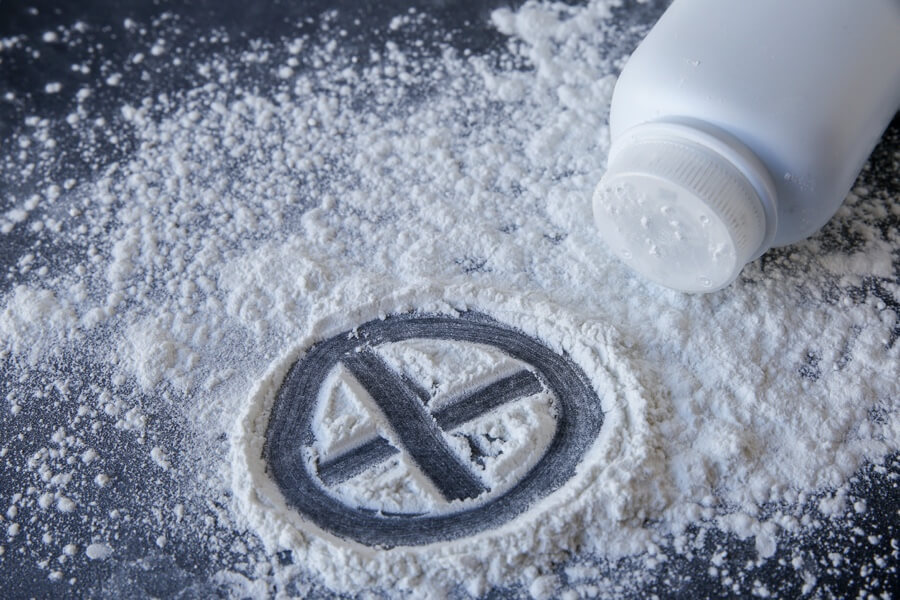
Talcum powder — commonly marketed as baby powder — is a product made from talc, a naturally occurring hydrated magnesium silicate mineral. When processed into powder form, it has traditionally been used to absorb moisture, reduce friction, and freshen skin. Johnson & Johnson has manufactured and sold talc-based personal care products, most notably Johnson's Baby Powder, for well over a century.
For decades, millions of women routinely applied talcum powder to the genital area as part of daily hygiene and feminine care routines — directly on the skin, on sanitary napkins, on underwear, and on diaphragms and condoms. This practice brought talc particles into close contact with the female reproductive system on a repeated, long-term basis.
Beginning in the 1970s, scientific studies began identifying a potential association between perineal talc use and ovarian cancer. Internal Johnson & Johnson documents subsequently obtained through litigation have shown that the company was aware of these scientific findings decades before any public warning was issued. Plaintiffs allege that J&J deliberately suppressed this information and continued marketing their talc products without any cancer risk disclosure — prioritizing revenue over consumer safety.
- J&J marketed talc products to women for perineal hygiene for over a century
- Internal J&J documents from the 1970s onward reference awareness of cancer risk association
- No consumer cancer warning was included on US talcum powder products for decades
- J&J discontinued its talc-based baby powder in the US and Canada in 2020
- Tens of thousands of individual ovarian cancer lawsuits filed across the United States

Core Legal Allegation: Johnson & Johnson knew for more than 40 years that a scientifically documented link existed between the perineal use of its talcum powder products and ovarian cancer — yet the company failed to warn consumers of this risk, and allegedly suppressed internal research that supported the cancer association. This failure to warn forms the foundation of tens of thousands of individual personal injury lawsuits.

Cancers and Conditions Linked to Talcum Powder Use
TThe two primary cancer types that form the basis of talcum powder litigation are ovarian cancer — linked to perineal use — and mesothelioma, linked to asbestos contamination found in talc deposits. Both represent serious, life-threatening diagnoses for which claimants are pursuing legal accountability.
Core Legal Allegation: Johnson & Johnson knew for more than 40 years that a scientifically documented link existed between the perineal use of its talcum powder products and ovarian cancer — yet the company failed to warn consumers of this risk, and allegedly suppressed internal research that supported the cancer association. This failure to warn forms the foundation of tens of thousands of individual personal injury lawsuits.
Ovarian Cancer
The primary injury alleged in talcum powder litigation. Research suggests that talc particles applied to the perineal area can migrate through the female reproductive tract and become embedded in ovarian tissue, triggering chronic inflammation that may contribute to malignant tumor development. Ovarian cancer has a poor early-stage detection rate, making it one of the most deadly gynecological cancers.
Mesothelioma (Asbestos-Contaminated Talc)
Talc and asbestos are geological neighbors — both silicate minerals often found in the same ore deposits. Testing of Johnson & Johnson's talc products by independent laboratories and US government agencies has at various times identified trace amounts of asbestos contamination. Mesothelioma — a rare and aggressive cancer of the lung lining — is directly linked to asbestos exposure, and consumers who used contaminated talc products may have viable mesothelioma claims.
Infant Respiratory Complications
When talcum powder becomes airborne during application, fine talc particles can be inhaled. Research has linked infant inhalation of airborne talc to respiratory complications including chronic coughing, rapid breathing, and in some cases, acute lung irritation. Pneumonia and asthma have also been associated with prolonged inhalation exposure, particularly in infants whose lungs are still developing.
Chronic Inflammation & Reproductive Harm
Beyond diagnosed cancer, plaintiffs allege that chronic inflammation caused by talc particle migration in the reproductive system constitutes a compensable injury — particularly in cases where the cancer diagnosis came after years or decades of product use. The progressive nature of these injuries has led to ongoing discovery of new claimants who are only recently connecting their diagnosis to prior talc use.
The Talc-Asbestos Link & Why It Matters for Mass Tort
Asbestos contamination in cosmetic talc products represents a distinct and independently significant legal theory — separate from ovarian cancer claims — that substantially broadens the scope of the talcum powder mass tort and the population of potentially eligible claimants.
Geological Co-occurrence
Talc and asbestos are both naturally occurring silicate minerals that form in similar geological environments. Asbestos fibers are frequently found in close proximity to talc ore deposits, meaning that commercially mined talc used in personal care products can become contaminated with asbestos during the extraction and milling process if proper safeguards are not maintained.
Independent Laboratory Testing
Multiple independent testing programs — including testing conducted by the FDA and commissioned by journalists and plaintiff attorneys — have at various points identified asbestos fibers in samples of Johnson & Johnson's talc-based products. These findings have been central to mesothelioma claims and have contributed to J&J's decision to discontinue talc-based baby powder in North America in 2020.
Expanded Claimant Population
Asbestos contamination findings expand the pool of potentially viable claimants beyond ovarian cancer diagnoses to include consumers who developed mesothelioma, lung cancer, or other asbestos-related conditions following long-term use of J&J talc products. This broader eligibility increases the total addressable claimant population for mass tort attorneys running talcum powder campaigns.
Johnson & Johnson's Response: Bankruptcy Strategy and Ongoing Litigation
Faced with tens of thousands of talc-related lawsuits, Johnson & Johnson created a subsidiary — LTL Management — and attempted to use a controversial "Texas Two-Step" bankruptcy strategy to resolve all talc claims through a restructured settlement fund. This approach was twice rejected by federal bankruptcy courts, which ruled that LTL Management did not meet the threshold for financial distress required for bankruptcy protection. As a result, individual talcum powder lawsuits continue to proceed in state and federal courts across the United States, and J&J has continued to negotiate potential global settlement arrangements. The ongoing nature of this litigation means the demand for qualified talcum powder claimants remains active and robust.
Why Talcum Powder Is One of the Largest Mass Tort Campaigns in US History
The talcum powder mass tort represents one of the highest-value, longest-running pharmaceutical and consumer product litigation campaigns in American legal history — with a claimant population numbering in the tens of thousands and total litigation exposure in the billions.
Total Verdicts & Settlements
Combined jury verdicts and settlement amounts across talcum powder ovarian cancer cases, making this one of the most financially significant mass tort campaigns in US history.
Individual Lawsuits Filed
More than 50,000 individual ovarian cancer and mesothelioma lawsuits have been filed against Johnson & Johnson and related entities related to talcum powder use.
J&J Discontinues Talc Products
Johnson & Johnson announced it would discontinue sales of talc-based baby powder in the United States and Canada in 2020, citing declining demand — an acknowledgment that strengthens plaintiff narratives.
New Claimants Continuing to Emerge
As public awareness of the talcum powder-cancer link grows, new claimants continue to enter the litigation pipeline each month — making this one of the most sustained mass tort lead generation opportunities available.
Who Qualifies as a Talcum Powder Claimant?
Our talcum powder pre-qualification screening confirms the key factual elements of a viable claim — distinguishing qualified claimants from general inquirers and ensuring that every lead delivered to your firm has the foundational facts needed to proceed with case evaluation.

Regular Talc-Based Product Use
The claimant must have used talcum powder or baby powder products — including Johnson's Baby Powder or Shower to Shower — regularly in the perineal or genital area for a significant period, as occasional use is unlikely to establish the exposure threshold required for a viable claim.
Ovarian Cancer or Mesothelioma Diagnosis
The claimant must have been formally diagnosed with ovarian cancer or mesothelioma by a licensed physician. Other cancer types are generally not currently included in the primary talcum powder litigation campaign, though future campaigns may expand eligibility.
Diagnosis Date and Product Use Overlap
The claimant's period of regular talcum powder use must overlap with or precede their cancer diagnosis — establishing a plausible temporal connection between exposure and injury that supports the causation element of the claim.
No Existing Legal Representation
The claimant must not already have a signed retainer agreement with another mass tort attorney for a talcum powder ovarian cancer or mesothelioma claim, ensuring the lead is actionable for your firm's intake team.
Within Applicable Statute of Limitations
The claimant's injury must fall within the applicable statute of limitations in their state — typically two to four years from date of diagnosis or discovery of the product connection. Our screening flags potential limitations issues for buyer review.

How PingTree Systems Delivers Talcum Powder Leads
Our four-stage lead delivery pipeline ensures every talcum powder claimant reaching your firm has been captured through genuine search intent, pre-screened against standard qualification criteria, verified for data quality, and delivered in real time to your intake team.
Intent-Driven Traffic
Women searching online for information about talcum powder lawsuits, baby powder ovarian cancer claims, or Johnson & Johnson litigation land on our SEO-optimized publisher content targeting campaign-specific keywords with verified legal intent.
Qualification Screening
Each prospect completes a structured qualification form confirming regular talc product use, cancer diagnosis type, approximate diagnosis date, whether they currently have legal representation, and basic contact information for follow-up.
LeadQC Verification
Our proprietary quality control system validates all contact details, removes duplicate submissions against your suppression list, confirms TCPA opt-in consent, and scores each lead before queuing it for real-time delivery.
Real-Time Delivery
Verified, qualified talcum powder claimants are pushed to your CRM, intake software, or email within 30 seconds of form submission — giving your team the fastest possible first-contact window to secure the retainer agreement.
Built for High-Volume Mass Tort Acquisition
PingTree Systems was purpose-built as lead distribution infrastructure for mass tort law firms and legal marketing agencies — not adapted from an unrelated industry platform. Every feature reflects the operational demands of high-volume pharmaceutical and consumer product case acquisition.
Real-Time Lead Delivery
Talcum powder leads arrive within 30 seconds of claimant submission — critical in a campaign where multiple firms compete for the same claimant pool simultaneously.
Campaign-Specific Qualification Screening
Our talcum powder campaign uses a customized pre-qualification questionnaire — product use confirmation, cancer diagnosis type, diagnosis date, and current attorney status — ensuring only viable claimants are delivered.
Multi-Campaign Portfolio Support
Run talcum powder leads alongside Xarelto, Risperdal, Taxotere, Hernia Mesh, or any other active mass tort campaign — all from a single buyer account with flexible monthly volume allocation across campaigns.
CRM & Intake Software Integration
Native integrations with Salesforce, HubSpot, Litify, Filevine, and 50+ legal CRM platforms via API and webhook. See our full integrations directory.
TCPA Compliance & Consent Documentation
Every talcum powder lead includes consumer opt-in consent records meeting TCPA requirements. Publisher sources are audited regularly. Consent logs available on request for your firm's compliance records.
Real-Time Campaign Analytics
Monitor talcum powder lead volume, qualification rates, contact rates, cost-per-case, and geographic performance across all your campaign allocations from a unified buyer analytics dashboard.
Talcum Powder Campaign Metrics
Explore More Mass Tort & Legal Lead Campaigns
PingTree Systems covers 40+ active mass tort campaigns across pharmaceutical, medical device, and products liability verticals. Explore related campaigns or visit our Mass Tort Leads hub for the full directory.
Xarelto Leads
Internal bleeding and cardiovascular event claimants linked to Xarelto use.
VIEW LEADS →Taxotere Leads
Chemotherapy patients with permanent hair loss following Taxotere treatment.
VIEW LEADS →Risperdal Leads
Gynecomastia and hormonal disorder claimants linked to Risperdal use.
VIEW LEADS →Hernia Mesh Leads
Patients with serious complications from defective hernia mesh implants.
VIEW LEADS →IVC Filter Leads
IVC filter fracture, migration, and organ perforation injury claimants.
VIEW LEADS →Medical Device Leads
Full range of defective medical device litigation campaigns on our platform.
VIEW LEADS →Drug Injury Leads
30+ active pharmaceutical injury campaigns — organ damage, cancer, birth defects.
VIEW LEADS →Products Liability Leads
Consumer product defect cases resulting in personal injury or wrongful death.
VIEW LEADS →Also explore: Lead Distribution Software Platform Features Pricing Integrations
Frequently Asked Questions About Talcum powder & mass tort leads
Ready to Build Your Talcum Powder Case Pipeline?
Join mass tort law firms across the United States using PingTree Systems to acquire pre-qualified talcum powder ovarian cancer and mesothelioma claimants — in real time, with campaign-specific screening and full TCPA compliance documentation included with every lead.
Exclusive Talcum Powder Mass Tort Leads for Ovarian Cancer Cases
PingTree Systems connects mass tort law firms with pre-screened talcum powder claimants — women diagnosed with ovarian cancer or mesothelioma following long-term use of talc-based personal care products — delivered in real time with full TCPA compliance documentation included.
What Is Talcum Powder and How Did It Become the Center of Mass Tort Litigation?
Talcum powder — commonly marketed as baby powder — is a product made from talc, a naturally occurring hydrated magnesium silicate mineral. When processed into powder form, it has traditionally been used to absorb moisture, reduce friction, and freshen skin. Johnson & Johnson has manufactured and sold talc-based personal care products, most notably Johnson's Baby Powder, for well over a century.
For decades, millions of women routinely applied talcum powder to the genital area as part of daily hygiene and feminine care routines — directly on the skin, on sanitary napkins, on underwear, and on diaphragms and condoms. This practice brought talc particles into close contact with the female reproductive system on a repeated, long-term basis.
Beginning in the 1970s, scientific studies began identifying a potential association between perineal talc use and ovarian cancer. Internal Johnson & Johnson documents subsequently obtained through litigation have shown that the company was aware of these scientific findings decades before any public warning was issued. Plaintiffs allege that J&J deliberately suppressed this information and continued marketing their talc products without any cancer risk disclosure — prioritizing revenue over consumer safety.
- J&J marketed talc products to women for perineal hygiene for over a century
- Internal J&J documents from the 1970s onward reference awareness of cancer risk association
- No consumer cancer warning was included on US talcum powder products for decades
- J&J discontinued its talc-based baby powder in the US and Canada in 2020
- Tens of thousands of individual ovarian cancer lawsuits filed across the United States
Core Legal Allegation: Johnson & Johnson knew for more than 40 years that a scientifically documented link existed between the perineal use of its talcum powder products and ovarian cancer — yet the company failed to warn consumers of this risk, and allegedly suppressed internal research that supported the cancer association. This failure to warn forms the foundation of tens of thousands of individual personal injury lawsuits.
Cancers and Conditions Linked to Talcum Powder Use
TThe two primary cancer types that form the basis of talcum powder litigation are ovarian cancer — linked to perineal use — and mesothelioma, linked to asbestos contamination found in talc deposits. Both represent serious, life-threatening diagnoses for which claimants are pursuing legal accountability.
Core Legal Allegation: Johnson & Johnson knew for more than 40 years that a scientifically documented link existed between the perineal use of its talcum powder products and ovarian cancer — yet the company failed to warn consumers of this risk, and allegedly suppressed internal research that supported the cancer association. This failure to warn forms the foundation of tens of thousands of individual personal injury lawsuits.
Ovarian Cancer
The primary injury alleged in talcum powder litigation. Research suggests that talc particles applied to the perineal area can migrate through the female reproductive tract and become embedded in ovarian tissue, triggering chronic inflammation that may contribute to malignant tumor development. Ovarian cancer has a poor early-stage detection rate, making it one of the most deadly gynecological cancers.
Mesothelioma (Asbestos-Contaminated Talc)
Talc and asbestos are geological neighbors — both silicate minerals often found in the same ore deposits. Testing of Johnson & Johnson's talc products by independent laboratories and US government agencies has at various times identified trace amounts of asbestos contamination. Mesothelioma — a rare and aggressive cancer of the lung lining — is directly linked to asbestos exposure, and consumers who used contaminated talc products may have viable mesothelioma claims.
Infant Respiratory Complications
When talcum powder becomes airborne during application, fine talc particles can be inhaled. Research has linked infant inhalation of airborne talc to respiratory complications including chronic coughing, rapid breathing, and in some cases, acute lung irritation. Pneumonia and asthma have also been associated with prolonged inhalation exposure, particularly in infants whose lungs are still developing.
Chronic Inflammation & Reproductive Harm
Beyond diagnosed cancer, plaintiffs allege that chronic inflammation caused by talc particle migration in the reproductive system constitutes a compensable injury — particularly in cases where the cancer diagnosis came after years or decades of product use. The progressive nature of these injuries has led to ongoing discovery of new claimants who are only recently connecting their diagnosis to prior talc use.
The Talc-Asbestos Link & Why It Matters for Mass Tort
Asbestos contamination in cosmetic talc products represents a distinct and independently significant legal theory — separate from ovarian cancer claims — that substantially broadens the scope of the talcum powder mass tort and the population of potentially eligible claimants.
Geological Co-occurrence
Talc and asbestos are both naturally occurring silicate minerals that form in similar geological environments. Asbestos fibers are frequently found in close proximity to talc ore deposits, meaning that commercially mined talc used in personal care products can become contaminated with asbestos during the extraction and milling process if proper safeguards are not maintained.
Independent Laboratory Testing
Multiple independent testing programs — including testing conducted by the FDA and commissioned by journalists and plaintiff attorneys — have at various points identified asbestos fibers in samples of Johnson & Johnson's talc-based products. These findings have been central to mesothelioma claims and have contributed to J&J's decision to discontinue talc-based baby powder in North America in 2020.
Expanded Claimant Population
Asbestos contamination findings expand the pool of potentially viable claimants beyond ovarian cancer diagnoses to include consumers who developed mesothelioma, lung cancer, or other asbestos-related conditions following long-term use of J&J talc products. This broader eligibility increases the total addressable claimant population for mass tort attorneys running talcum powder campaigns.
Johnson & Johnson's Response: Bankruptcy Strategy and Ongoing Litigation
Faced with tens of thousands of talc-related lawsuits, Johnson & Johnson created a subsidiary — LTL Management — and attempted to use a controversial "Texas Two-Step" bankruptcy strategy to resolve all talc claims through a restructured settlement fund. This approach was twice rejected by federal bankruptcy courts, which ruled that LTL Management did not meet the threshold for financial distress required for bankruptcy protection. As a result, individual talcum powder lawsuits continue to proceed in state and federal courts across the United States, and J&J has continued to negotiate potential global settlement arrangements. The ongoing nature of this litigation means the demand for qualified talcum powder claimants remains active and robust.
Why Talcum Powder Is One of the Largest Mass Tort Campaigns in US History
The talcum powder mass tort represents one of the highest-value, longest-running pharmaceutical and consumer product litigation campaigns in American legal history — with a claimant population numbering in the tens of thousands and total litigation exposure in the billions.
Total Verdicts & Settlements
Combined jury verdicts and settlement amounts across talcum powder ovarian cancer cases, making this one of the most financially significant mass tort campaigns in US history.
Individual Lawsuits Filed
More than 50,000 individual ovarian cancer and mesothelioma lawsuits have been filed against Johnson & Johnson and related entities related to talcum powder use.
J&J Discontinues Talc Products
Johnson & Johnson announced it would discontinue sales of talc-based baby powder in the United States and Canada in 2020, citing declining demand — an acknowledgment that strengthens plaintiff narratives.
New Claimants Continuing to Emerge
As public awareness of the talcum powder-cancer link grows, new claimants continue to enter the litigation pipeline each month — making this one of the most sustained mass tort lead generation opportunities available.
Who Qualifies as a Talcum Powder Claimant?
Our talcum powder pre-qualification screening confirms the key factual elements of a viable claim — distinguishing qualified claimants from general inquirers and ensuring that every lead delivered to your firm has the foundational facts needed to proceed with case evaluation.
Regular Talc-Based Product Use
The claimant must have used talcum powder or baby powder products — including Johnson's Baby Powder or Shower to Shower — regularly in the perineal or genital area for a significant period, as occasional use is unlikely to establish the exposure threshold required for a viable claim.
Ovarian Cancer or Mesothelioma Diagnosis
The claimant must have been formally diagnosed with ovarian cancer or mesothelioma by a licensed physician. Other cancer types are generally not currently included in the primary talcum powder litigation campaign, though future campaigns may expand eligibility.
Diagnosis Date and Product Use Overlap
The claimant's period of regular talcum powder use must overlap with or precede their cancer diagnosis — establishing a plausible temporal connection between exposure and injury that supports the causation element of the claim.
No Existing Legal Representation
The claimant must not already have a signed retainer agreement with another mass tort attorney for a talcum powder ovarian cancer or mesothelioma claim, ensuring the lead is actionable for your firm's intake team.
Within Applicable Statute of Limitations
The claimant's injury must fall within the applicable statute of limitations in their state — typically two to four years from date of diagnosis or discovery of the product connection. Our screening flags potential limitations issues for buyer review.
How PingTree Systems Delivers Talcum Powder Leads
Our four-stage lead delivery pipeline ensures every talcum powder claimant reaching your firm has been captured through genuine search intent, pre-screened against standard qualification criteria, verified for data quality, and delivered in real time to your intake team.
Intent-Driven Traffic
Women searching online for information about talcum powder lawsuits, baby powder ovarian cancer claims, or Johnson & Johnson litigation land on our SEO-optimized publisher content targeting campaign-specific keywords with verified legal intent.
Qualification Screening
Each prospect completes a structured qualification form confirming regular talc product use, cancer diagnosis type, approximate diagnosis date, whether they currently have legal representation, and basic contact information for follow-up.
LeadQC Verification
Our proprietary quality control system validates all contact details, removes duplicate submissions against your suppression list, confirms TCPA opt-in consent, and scores each lead before queuing it for real-time delivery.
Real-Time Delivery
Verified, qualified talcum powder claimants are pushed to your CRM, intake software, or email within 30 seconds of form submission — giving your team the fastest possible first-contact window to secure the retainer agreement.
Built for High-Volume Mass Tort Acquisition
PingTree Systems was purpose-built as lead distribution infrastructure for mass tort law firms and legal marketing agencies — not adapted from an unrelated industry platform. Every feature reflects the operational demands of high-volume pharmaceutical and consumer product case acquisition.
Real-Time Lead Delivery
Talcum powder leads arrive within 30 seconds of claimant submission — critical in a campaign where multiple firms compete for the same claimant pool simultaneously.
Campaign-Specific Qualification Screening
Our talcum powder campaign uses a customized pre-qualification questionnaire — product use confirmation, cancer diagnosis type, diagnosis date, and current attorney status — ensuring only viable claimants are delivered.
Multi-Campaign Portfolio Support
Run talcum powder leads alongside Xarelto, Risperdal, Taxotere, Hernia Mesh, or any other active mass tort campaign — all from a single buyer account with flexible monthly volume allocation across campaigns.
CRM & Intake Software Integration
Native integrations with Salesforce, HubSpot, Litify, Filevine, and 50+ legal CRM platforms via API and webhook. See our full integrations directory.
TCPA Compliance & Consent Documentation
Every talcum powder lead includes consumer opt-in consent records meeting TCPA requirements. Publisher sources are audited regularly. Consent logs available on request for your firm's compliance records.
Real-Time Campaign Analytics
Monitor talcum powder lead volume, qualification rates, contact rates, cost-per-case, and geographic performance across all your campaign allocations from a unified buyer analytics dashboard.
Talcum Powder Campaign Metrics
Explore More Mass Tort & Legal Lead Campaigns
PingTree Systems covers 40+ active mass tort campaigns across pharmaceutical, medical device, and products liability verticals. Explore related campaigns or visit our Mass Tort Leads hub for the full directory.
Xarelto Leads
Internal bleeding and cardiovascular event claimants linked to Xarelto use.
VIEW LEADS →Taxotere Leads
Chemotherapy patients with permanent hair loss following Taxotere treatment.
VIEW LEADS →Risperdal Leads
Gynecomastia and hormonal disorder claimants linked to Risperdal use.
VIEW LEADS →Hernia Mesh Leads
Patients with serious complications from defective hernia mesh implants.
VIEW LEADS →IVC Filter Leads
IVC filter fracture, migration, and organ perforation injury claimants.
VIEW LEADS →Medical Device Leads
Full range of defective medical device litigation campaigns on our platform.
VIEW LEADS →Drug Injury Leads
30+ active pharmaceutical injury campaigns — organ damage, cancer, birth defects.
VIEW LEADS →Products Liability Leads
Consumer product defect cases resulting in personal injury or wrongful death.
VIEW LEADS →Also explore: Lead Distribution Software Platform Features Pricing Integrations
Frequently Asked Questions About Talcum powder & mass tort leads
Ready to Build Your Talcum Powder Case Pipeline?
Join mass tort law firms across the United States using PingTree Systems to acquire pre-qualified talcum powder ovarian cancer and mesothelioma claimants — in real time, with campaign-specific screening and full TCPA compliance documentation included with every lead.

