

A shopper searches for health coverage, fills in a quote form, and then waits. In that short window, three or four agents may be competing for the same person. The agent who calls first usually gets the conversation, and often the sale. That is the core idea behind speed-to-lead, and it is why real-time health insurance leads have become the standard for high-performing agencies.
This guide explains what speed-to-lead means, why it matters more in health insurance than in most verticals, and how to build a delivery process that reaches shoppers in seconds. If you are new to lead delivery, start with our overview of lead distribution software.
Key Takeaway: Health insurance shoppers compare quickly and decide quickly. Real-time delivery plus instant follow-up keeps your agents ahead of competitors and protects your cost per enrollment.
What Is Speed-to-Lead?
Speed-to-lead is the time between a consumer submitting a request and your first meaningful contact attempt. It is measured in minutes, and the best teams measure it in seconds. Industry research on lead response, including widely cited studies from sales-research groups, consistently finds that contact and qualification rates drop sharply as response time grows. The pattern holds across financial services, and health insurance is especially exposed to it.
Why Speed Matters More in Health Insurance
- Shoppers compare multiple quotes. Most people request several quotes at once. The first call is remembered; the fifth is ignored.
- Intent fades quickly. A shopper who is worried about a premium today may be distracted tomorrow.
- Enrollment windows are fixed. ACA marketplace and Medicare enrollment periods create hard deadlines. Missed leads cannot be recovered after the window closes.
- Trust is built early. A fast, helpful call signals a professional agency, which matters for a sensitive product like health coverage.
Real-Time Leads vs. Aged and Batch Leads
| Factor | Real-Time Leads | Aged / Batch Leads |
|---|---|---|
| Delivery time | Within seconds via API or ping post | Hours or days, by email or file |
| Consumer intent | High, still on the quote journey | Lower, may have already enrolled |
| Contact rate | Higher | Lower |
| Cost per lead | Higher | Lower |
| Cost per enrollment | Often lower | Often higher |
| Best use | Primary sales campaigns | Nurture and re-marketing |
The lesson: judge lead sources by cost per enrollment, not cost per lead. A cheap lead that never answers the phone is the most expensive lead you can buy.
The longer a health insurance lead waits, the harder it becomes to reach.
How Ping Post Makes Real-Time Delivery Possible
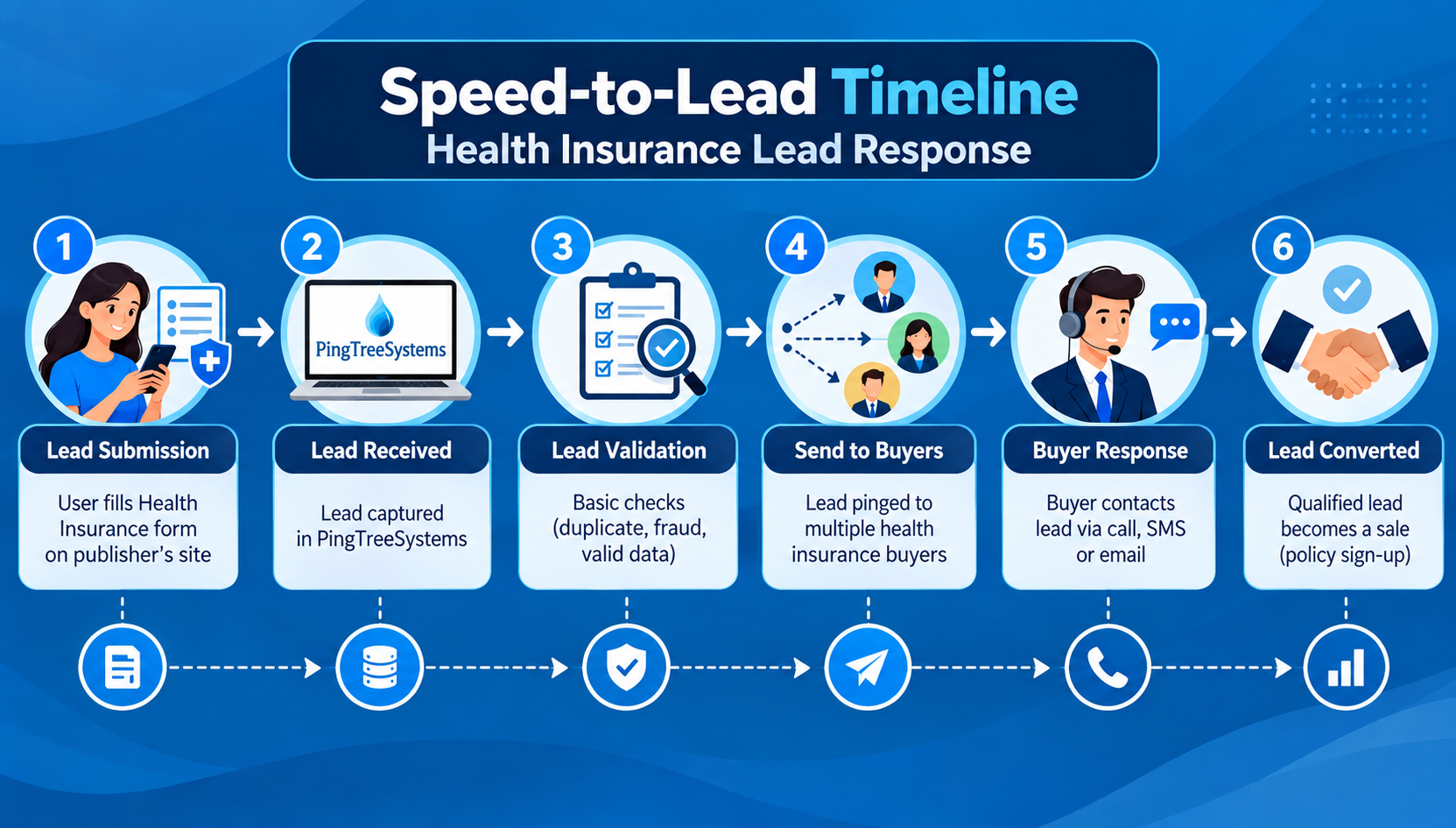
Manual lead handling cannot keep up with real-time expectations. Ping post automates the whole path. A partial lead (state, age range, coverage type) is pinged to matched buyers. Each buyer replies with a bid or a pass in about a second. The full lead is then posted to the winner so they can call immediately.
For publishers, that means higher revenue per lead through competition. For agencies, it means the leads arrive instantly and match their licensing, state and product rules. Learn more on our health insurance leads page or explore the Health Insurance ping and post platform.
6 Ways to Improve Speed-to-Lead in Your Agency
1. Connect Leads Directly to Your CRM
Use API or webhook delivery so each lead lands in your CRM the moment it is posted. Our guide on how a CRM helps convert health insurance leads into sales shows how to set this up.
2. Trigger Instant Alerts
Send push, SMS or dialer alerts to the assigned agent immediately. A lead that sits in an inbox is a lead lost.
3. Use Smart Filters and Routing
Route by state license, plan type (ACA, Medicare, short-term, supplemental), age and language. The right agent answering first beats the nearest agent answering late.
4. Automate the First Touch
While an agent is dialing, send an automatic text or email confirming the request. This keeps the shopper engaged and supports consent records. Follow FCC rules on calls and texts and confirm consent for every contact method.
5. Validate Data at Intake
Real-time phone and email checks remove fake or mistyped submissions, so agents spend time on contactable people only.
6. Staff for Peak Hours and Open Enrollment
Lead volume spikes in the weeks around enrollment deadlines. Plan agent shifts, dialer capacity and caps ahead of time so no lead waits in a queue.
6. Match Your Timing Strategy to Lead TypWhat to Measure
Time to First Contact
Median time from submission to first call attempt.
Contact Rate
Share of leads where an agent speaks to the shopper.
Cost per Enrollment
The real measure of lead source value.
Also track attempts per lead, quote-to-enrollment rate and return rate by traffic source. Review them weekly and cut sources that look cheap but never convert.
Conclusion
In health insurance, speed is a competitive advantage you can control. Real-time delivery, instant alerts and smart routing put your agents in front of shoppers while intent is high. Agencies that measure response time, and buy on cost per enrollment, consistently outperform those that chase the lowest lead price. Pair a ping post platform with a well-run CRM and you turn seconds into enrollments.
Frequently Asked Questions
It is the time between a consumer submitting a quote request and an agent making first contact. The shorter the gap, the more likely the shopper is to answer, stay engaged and enroll.
They are leads delivered to an agent or agency within seconds of form submission, usually through an API or ping post system, instead of being batched and sent later by email or spreadsheet.
As fast as possible, ideally within the first few minutes. Responding while the shopper is still on the quote page gives you the best chance of reaching them before competing agents do.
Ping post sends a partial lead to matched buyers, collects bids in about a second, and posts the full lead to the winner. This removes manual delays and sends each lead to the buyer most likely to value it.
Usually yes per lead, but they often cost less per enrollment because contact and conversion rates are higher. Compare cost per sale, not just cost per lead.