

The lead generation industry has become extremely competitive. Businesses spend large amounts of money generating traffic, capturing inquiries, and building marketing funnels, yet many still struggle with poor lead quality, low conversion rates, and wasted opportunities. Traditional lead selling methods often create frustration for both buyers and sellers because leads are distributed slowly, priced inefficiently, or sent to the wrong audience.
This is where Ping Post Lead Distribution has completely changed the market. Instead of selling leads through outdated fixed-price models, businesses now use real-time lead routing systems that automatically match inquiries with the most interested and qualified buyers. This creates faster decisions, higher lead value, and better conversion opportunities for everyone involved.
What Is Ping Post Lead Distribution?
Ping Post Lead Distribution is a real-time lead selling process where partial lead information is first shared with multiple buyers before the full lead is delivered. Instead of sending the complete lead immediately, the system first “pings” buyers with limited information such as ZIP code, product interest, or qualification details.
Buyers then decide whether they want the lead based on their targeting preferences, campaign goals, or bid amount. Once the best buyer responds, the system automatically “posts” the full lead details to that winning buyer in real time. This creates a much more efficient and profitable lead marketplace.
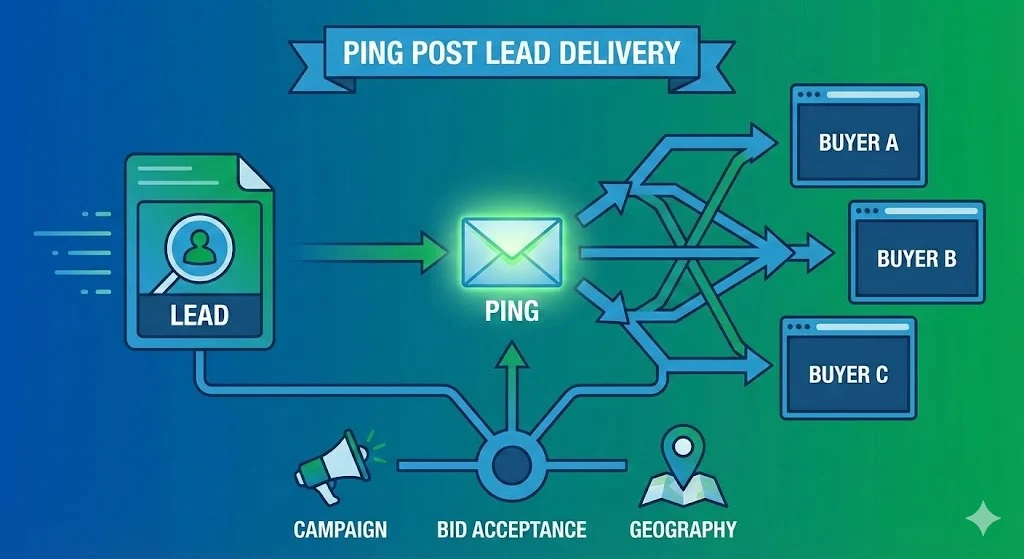
Important ping post workflow stages include:
- Partial lead data sharing
- Real-time buyer evaluation
- Competitive lead bidding
- Automated lead routing
- Instant lead delivery
Why Lead Sellers Benefit from Ping Post Systems
Traditional lead selling often limits how much revenue businesses can generate from each inquiry. Sellers may send leads to a single buyer at a fixed price without knowing whether another buyer would have paid significantly more. This creates lost monetization opportunities and unnecessary lead waste.
Ping Post systems solve this problem by exposing each lead to multiple buyers simultaneously. The marketplace determines the lead’s real-time value based on buyer demand and qualification criteria. This allows sellers to maximize revenue while ensuring leads reach buyers who genuinely want them.
Important seller advantages may include:
- Higher revenue per lead
- Reduced lead waste
- Real-time buyer competition
- Better lead monetization
- Automated sales workflows
Why Buyers Prefer Ping Post Lead Distribution
Lead buyers also benefit significantly from Ping Post systems because they gain much more control over which leads they purchase. Instead of receiving random bulk lists, buyers can evaluate each opportunity before committing to the full lead.
This improves lead quality and reduces wasted marketing spend because buyers only accept leads matching their exact criteria. Businesses can filter based on geography, product type, budget, eligibility, or campaign targeting while controlling daily volume and bid strategy.
Important buyer filters may include:
- Geographic targeting
- Credit score range
- Product interest
- Buyer capacity limits
- Campaign eligibility rules
How Ping Tree Systems Improve Lead Routing Efficiency
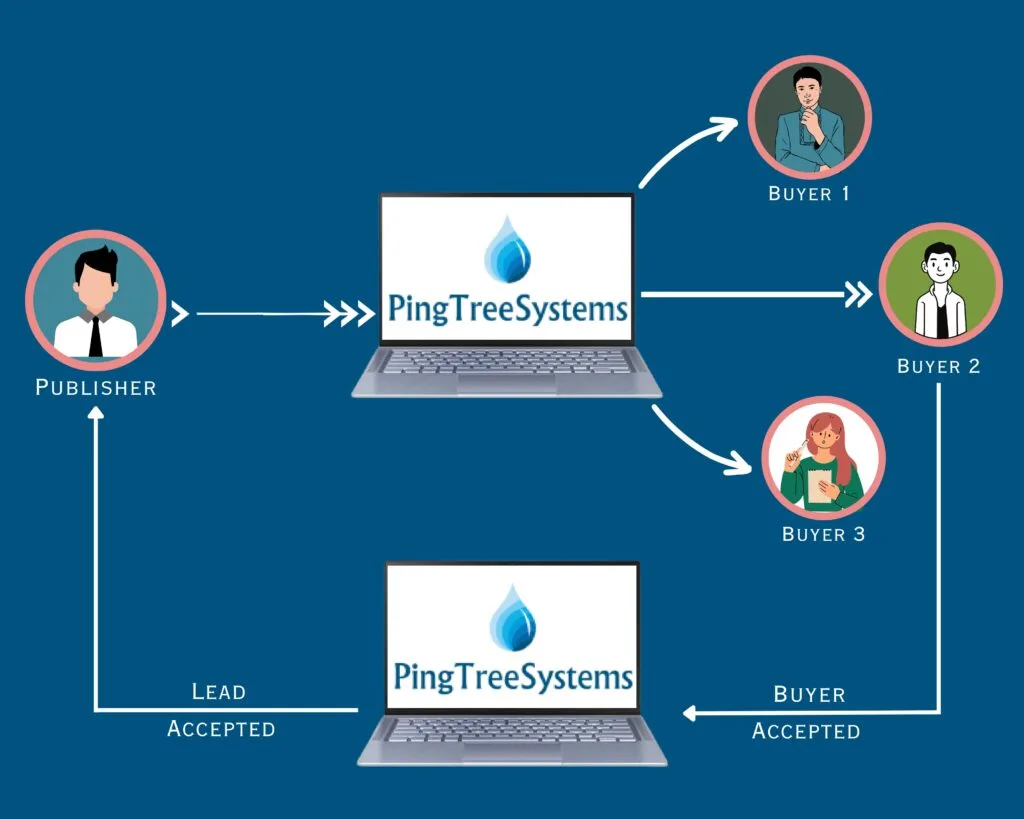
Not every lead gets accepted by the first buyer. Some leads may fall outside campaign requirements, exceed volume caps, or fail to match a buyer’s qualification criteria. Without proper routing systems, these rejected leads often become wasted opportunities.
Technology powered by Ping Tree Systems helps solve this problem by creating structured buyer hierarchies. If one buyer rejects the lead, the system automatically routes it to the next eligible buyer based on predefined rules and priorities.
This creates a more efficient marketplace while helping businesses improve lead fill rates and revenue optimization.
Important routing capabilities may include:
- Multi-buyer routing
- Buyer priority logic
- Dynamic pricing workflows
- Automated rejection handling
- Real-time lead allocation
Why Real-Time Automation Is Essential for Modern Lead Businesses
The speed of modern digital marketing makes manual lead handling almost impossible at scale. Businesses managing thousands of inquiries every day need systems capable of routing, evaluating, and delivering leads instantly while maintaining accuracy and efficiency.
Real-time automation allows companies to respond faster, reduce operational delays, and maximize lead value without dramatically increasing staffing costs. Instead of manually reviewing inquiries, businesses can rely on intelligent routing systems that operate automatically behind the scenes.
A stronger lead distribution strategy should focus on:
- Real-time lead delivery
- Better buyer matching
- Higher lead monetization
- Smarter routing automation
- Reduced lead waste
FAQ – Ping Post Lead Distribution Questions
What is Ping Post Lead Distribution?
Ping post is a real-time lead distribution method where limited customer information is first shared with buyers before the full lead is routed to the best match.
Why is ping post better than traditional lead selling?
It improves lead quality, creates buyer competition, and helps sellers maximize revenue from each lead.
How do buyers evaluate ping post leads?
Buyers review limited lead data and decide whether the inquiry matches their targeting and qualification criteria.
What is a Ping Tree System?
A Ping Tree System routes rejected leads through multiple buyers until the lead finds the best available match.
Why do lead sellers use ping post systems?
They help increase lead monetization, reduce waste, and automate lead routing workflows.
How does automation improve lead distribution?
Automation speeds up lead delivery, improves accuracy, and reduces manual operational workload.
Final Thoughts
The lead generation industry is evolving quickly, and businesses relying on outdated lead selling methods often struggle with lower conversion rates and wasted revenue opportunities. Companies now need smarter systems that improve lead quality, automate routing, and maximize buyer matching efficiency.