

Moving day is one of the most logistically demanding days most people will ever manage — a tight sequence of deadlines, deliveries, physical labor, and decisions that all have to happen in the right order. The difference between a smooth move and a chaotic one usually isn't the movers you hire or the boxes you bought — it's whether you had a plan for the day itself.
Most moving guides focus heavily on the weeks of packing that come before moving day, then treat the day itself as an afterthought. But moving day has its own logistics problem: dozens of small tasks — confirming arrival times, directing loading order, tracking boxes, checking for damage, coordinating helpers — all compressed into a single, high-pressure window. Missing any one of them can mean a lost item, an unnecessary argument, or hours of avoidable stress.
This guide breaks moving day into a clear, hour-by-hour checklist so you always know what comes next — from the moment you wake up to the moment you unpack your last box.
Key Takeaway: A well-run moving day follows four phases — final prep, loading, transit and arrival, and settling in — and each phase has a small number of tasks that matter far more than the rest. Confirm details early, label everything as you load, inspect everything as you unload, and unpack in priority order. Get those four things right and the rest of the day tends to take care of itself.
Key Moving Day Statistics
"Moving day rarely goes wrong because of a bad moving company. It goes wrong because nobody wrote down who was doing what, and by 11 a.m. everyone is improvising." — Household Relocation Planning Notes
Before Moving Day: The Final Prep Checklist
The best moving days are won the night before. These final prep steps take less than an hour combined but prevent almost every common moving day problem:
Confirm Details With Movers
Call or text to verify arrival time, crew size, and any parking, elevator, or building access requirements. Confirming the night before catches scheduling issues while there's still time to fix them.
Prepare Your New Home
Confirm electricity, water, and internet are active before you arrive, and plan for a quick clean of key rooms — kitchen and bathrooms especially — before boxes start coming in.
Pack a Separate Essentials Bag
Keep documents, medications, chargers, valuables, and a first-night kit — toiletries, bedding, a change of clothes — in a bag you carry yourself, never loaded onto the truck.
Print or Save Your Floor Plan
A simple room-by-room diagram of your new place, shared with movers or helpers, speeds up unloading dramatically and prevents boxes from piling up in the wrong rooms.

Prep done the night before pays off in fewer surprises once moving day actually starts.
Early Morning: Final Walkthrough & Team Prep
How you spend the first hour of moving day sets the tone for everything after it. Treat this window as non-negotiable prep time, not something to rush through:
Get an Early Start:
Wake up with enough buffer to eat a real breakfast before movers or helpers arrive — physical labor on an empty stomach leads to fatigue and mistakes by mid-morning.
Do a Final Walk-Through:
Check every closet, cabinet, and drawer for forgotten items, and confirm all windows and doors will be secured once you leave.
Communicate With Your Team:
If friends or family are helping, confirm their arrival times and assign specific tasks — loading, driving, cleaning, or watching kids or pets — so nobody is standing around unsure what to do.
Prepare the Moving Vehicle Path:
Clear driveways, hallways, and doorframes of obstacles so the truck and crew have a clean, direct route in and out of the home.
The Result: A crew or group of helpers who know exactly what's happening, a home that's already been checked for stragglers, and a driveway that's ready for a truck the moment it pulls up. That's the difference between a 9 a.m. start that runs smoothly and one that loses its first hour to confusion.
Loading the Truck: Order, Labeling & Priorities
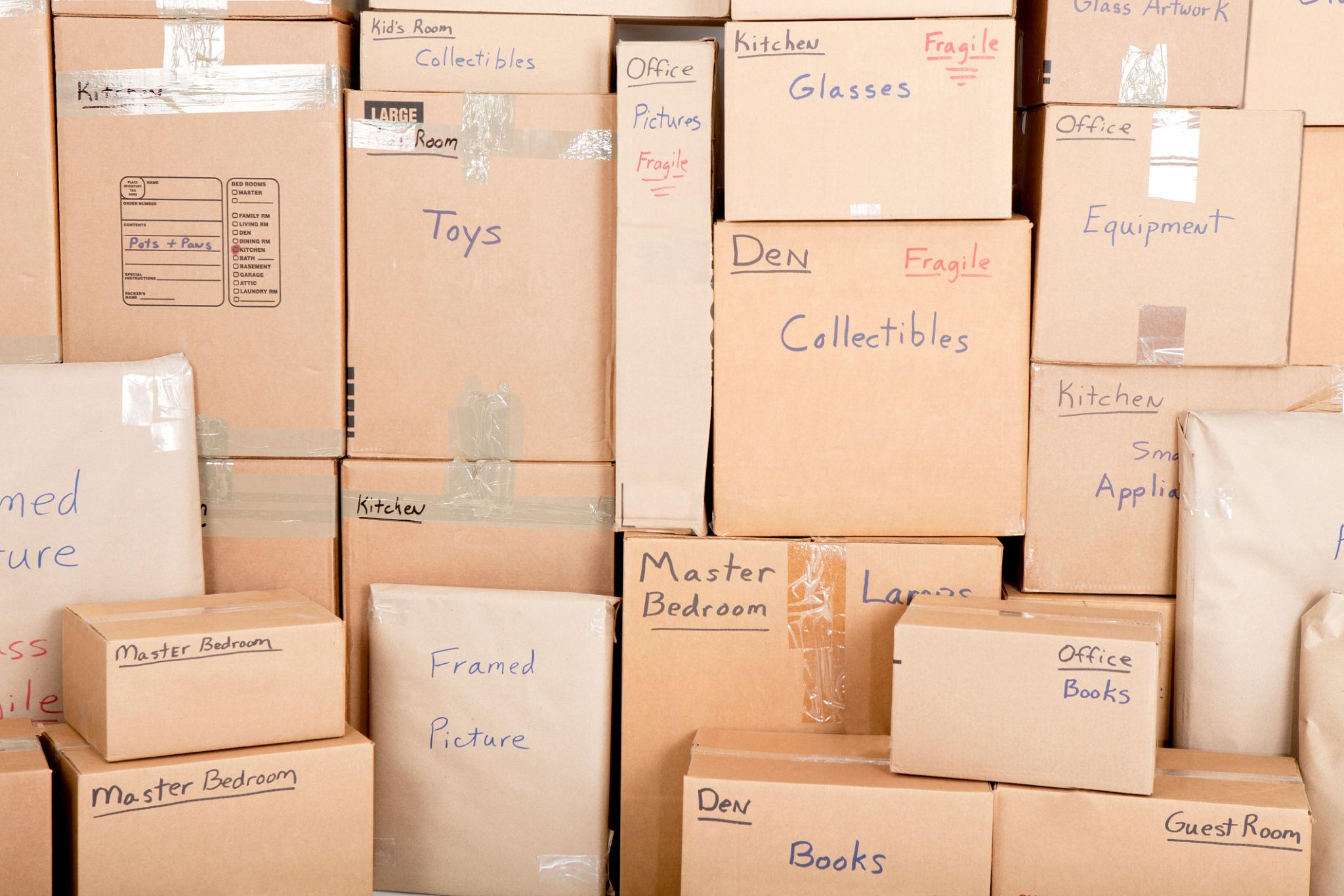
Clear labeling during loading is what makes unloading fast instead of chaotic.
Loading is where most physical strain — and most accidental damage — happens. A little structure here saves real time later:
Label Every Box
Mark each box with its destination room, and consider color-coded stickers per room so movers can sort at a glance without asking you where each box goes.
Load in Priority Order
Large, heavy items go in first and against the walls; boxes fill in around them, heaviest on the bottom. Keep first-night essentials near the door for fast unloading.
Stay Hydrated & Fed
Keep water and easy snacks accessible throughout loading, and build in short breaks — exhaustion is when boxes get dropped and backs get strained.
Handle Payments & Tips
Have final payment ready before loading wraps up, and budget a tip if the crew's service warranted it — this avoids an awkward, rushed transaction as everyone is ready to leave.
Arriving at Your New Home: Unloading & Damage Checks
The job isn't done when the truck arrives — the last mile of moving day is where forgotten items and unnoticed damage most often slip through:
Direct the Unloading:
Use your floor plan to tell movers exactly where each labeled box or piece of furniture goes, avoiding a pile-up in the entryway that has to be sorted later.
Check for Damage:
Inspect furniture and boxes as they come off the truck, not days later. Document anything questionable with a photo immediately in case you need to file a claim.
Confirm Everything Arrived:
Walk through the empty truck and compare against your inventory list before the crew leaves — this is your last chance to catch a missing item easily.
Prioritize Unpacking:
Start with the kitchen and bedroom so you have a functional place to cook and sleep, then move to other rooms one at a time rather than opening every box at once.
Take Breaks and Order Dinner:
Don't push through exhaustion to finish unpacking in one day. A stress-free dinner and an early night will make day two far more productive.
Plan Tomorrow Before Bed:
Jot down the next day's priorities — remaining unpacking, address changes, cleaning — so you wake up with a plan instead of starting the day from scratch.
Unplanned Move vs. Checklist-Driven Move: Full Comparison
This table compares what a typical unplanned, improvised moving day looks like against a move run from a structured, hour-by-hour checklist:
| Moving Day Factor | ❌ Unplanned / Improvised Move | ✅ Checklist-Driven Move |
|---|---|---|
| Morning Start | Rushed, no walkthrough, items forgotten in closets and drawers | Early start with a deliberate final walkthrough of every room |
| Team Coordination | Helpers unsure what to do, duplicated or missed tasks | Assigned roles confirmed in advance, everyone knows their job |
| Box Labeling | Generic or missing labels; guesswork during unloading | Room-coded labels; movers sort boxes without asking questions |
| Loading Order | Random order; heavy items loaded last, awkward to place | Large items first, boxes layered by weight, essentials near the door |
| Damage Detection | Discovered days later, harder to prove and resolve | Checked at unloading, documented immediately with photos |
| Inventory Accuracy | No final count; missing items noticed after the crew leaves | Inventory checked against the empty truck before crew departs |
| Unpacking Approach | Every box opened at once, no functional room for days | Kitchen and bedroom first, other rooms sequenced afterward |
| End-of-Day Stress | Exhaustion with no plan for the next day | Rest built in, next day's priorities set before bed |
Who This Checklist Helps Most
First-Time Movers
If you've never coordinated a full move before, a step-by-step checklist replaces guesswork with a clear sequence — reducing the chance of a forgotten task or an avoidable mistake.
Families With Kids or Pets
Assigning roles and having a plan for the day means someone is always responsible for keeping kids and pets safe and out of the way during loading and unloading.
Anyone Moving Without Full-Service Movers
If you and a group of friends or family are handling the move yourselves, structure matters even more — there's no professional crew to fall back on if the plan breaks down.
Conclusion: A Plan Beats a Long To-Do List
Moving day success isn't about doing more — it's about knowing what to do at each hour and not having to figure it out in the moment. A short, sequenced checklist consistently beats a long, unordered to-do list because it tells you not just what needs to happen, but when — which is exactly the kind of decision fatigue that makes moving day feel harder than it needs to be.
Confirm your details the night before, run a real walkthrough in the morning, label and load with intention, and inspect everything as it comes off the truck. Do those four things and the rest of the day — unpacking, settling in, even the exhaustion at the end of it — becomes far more manageable.
Moving Company Looking to Fill Your Calendar? Ping Tree Systems' Moving Ping & Post platform connects your company with verified, real-time moving leads matched to your service territory. Request a free demo today →
Frequently Asked Questions
Most moving days should start by 7 or 8 a.m., giving you time for a final walkthrough and prep before movers typically arrive between 8 and 10 a.m. Starting early builds in a buffer for delays, traffic, or last-minute surprises without pushing the whole day behind schedule.
Keep identification, medications, chargers, a change of clothes, toiletries, basic tools, and any valuables or important documents in a bag you carry yourself rather than loading onto the truck. This ensures you have what you need immediately, even if the truck is delayed or boxes are hard to find at first.
Load heavy, large items like appliances and furniture first against the truck walls, then fill gaps with boxes stacked heaviest-to-lightest to prevent shifting in transit. Keep frequently needed items and first-night essentials near the door so they're easy to access first at your new home.
Tipping isn't required but is customary in the U.S. when service is good — typically fifteen to twenty dollars per mover for a half-day job, and more for longer or especially physically demanding moves. Having cash or a payment method ready in advance avoids an awkward scramble when the crew is finishing up.
Do a final walkthrough of the truck and every room, inspect furniture and boxes for visible damage, and confirm your full inventory list against what was delivered before signing off or making final payment. Catching an issue while the crew is still on site is far easier than trying to resolve it after they've left.
Start with the kitchen and bedroom. Having a functional place to sleep and prepare food removes most of the stress from the following days, even if boxes in the living room, garage, or office stay packed a little longer while you settle in at your own pace.