Energy costs are one of the few line items a business can actually shrink instead of just budget around. Solar power has moved from "nice-to-have sustainability project" to a straightforward financial decision, and more companies are treating it that way in 2026. This guide walks through why solar makes sense, exactly how to plan and install a system, and how businesses in the solar industry itself — installers, brokers, and lead generators — use tools like Ping Tree Systems' lead distribution software to turn rising demand for solar into predictable revenue.
Why Solar Power Makes Business Sense
Going solar is no longer just about optics. It's a hedge against volatile utility rates, a tax strategy, and increasingly a customer-acquisition advantage. Here's what's driving adoption:
💰 Lower, More Predictable Energy Costs
A commercial solar array converts a variable monthly expense into a fixed, largely prepaid one. Once installed, the marginal cost of the electricity it produces is close to zero, insulating the business from utility rate hikes for 20+ years.
🔋 Energy Independence & Resilience
Paired with battery storage, solar reduces exposure to grid outages and peak-demand pricing. Businesses can draw stored power during high-cost hours instead of buying electricity at premium rates.
🌍 Stronger ESG & Brand Positioning
Corporate sustainability commitments are increasingly scrutinized by customers, investors, and partners. A visible solar investment is one of the most tangible ESG proof points a company can point to.
🏛️ Tax Credits & Incentives
The federal Investment Tax Credit (ITC), accelerated depreciation, and state-level rebates can offset a significant share of installation costs, shortening the payback period considerably.
For solar companies: demand created by these incentives is only valuable if it reaches you before it reaches a competitor. That's the exact problem Ping Post for Solar is built to solve — routing inbound solar interest to the right buyer in real time.
6 Steps to Integrate Solar Power Into Your Operations
Moving from "interested" to "installed" follows a fairly predictable path. Here's how most commercial solar projects unfold, from first audit to full integration.
Audit Your Energy Usage
- Pull 12 months of utility bills to establish a baseline load profile.
- Identify peak-demand hours — these determine how large a system you actually need.
Run a Feasibility Study
- Check roof condition, orientation, and available square footage (or land, for ground-mount systems).
- Confirm local permitting rules, HOA restrictions, and utility interconnection requirements.
- Factor in regional sun-hours — feasibility looks very different in Arizona versus Michigan.
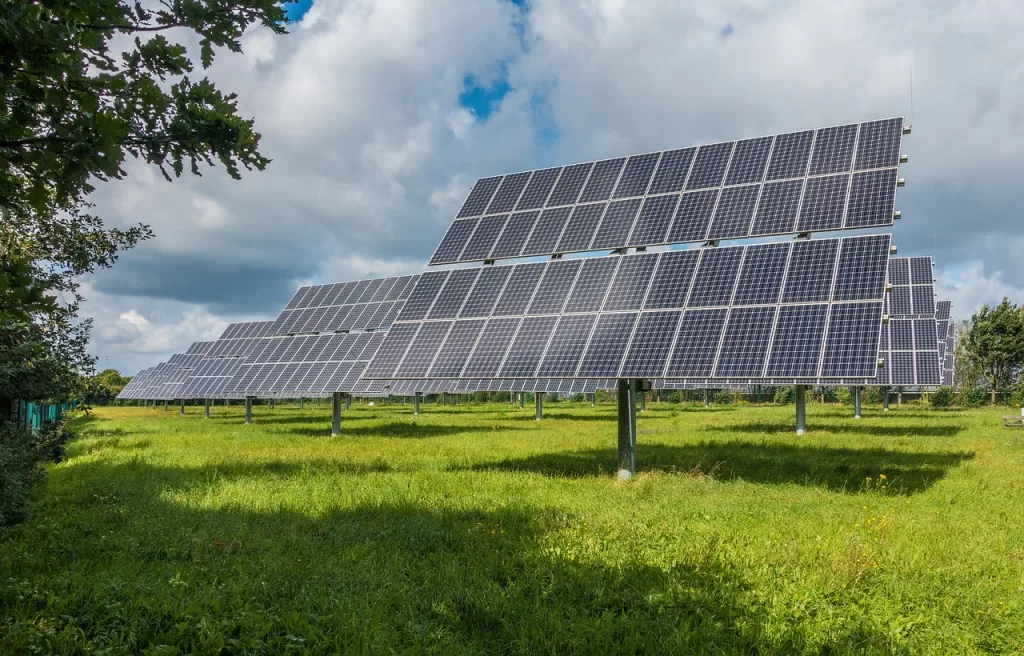
Choose the Right System Type
This is the decision with the biggest long-term impact on cost and resilience — see the comparison table below before committing.
Grid-Tied vs. Off-Grid vs. Hybrid: Which System Fits Your Business?
| System Type | How It Works | Best For | Upfront Cost |
|---|---|---|---|
| Grid-Tied Most Common | Stays connected to the utility grid; excess energy is sold back via net metering. | Standard offices, retail, and warehouses with reliable grid access. | Lowest |
| Off-Grid | Fully independent, relies entirely on batteries for storage. | Remote sites, farms, or locations without practical grid access. | Highest |
| Hybrid | Combines solar + battery storage while staying grid-connected for backup. | Businesses that need resilience during outages or peak-rate hours. | Moderate–High |
Decide How You'll Pay For It
Financing structure changes both your upfront cash outlay and your long-term savings. Compare the three most common paths:
| Financing Option | Upfront Cost | Who Owns the System | Long-Term Savings |
|---|---|---|---|
| Cash Purchase / Solar Loan | Full cost or loan down payment | You | Highest — you keep 100% of savings and incentives |
| Power Purchase Agreement (PPA) | $0 | Third-party provider | Moderate — you pay a lower per-kWh rate than the utility |
| Solar Lease | $0 (fixed monthly fee) | Leasing company | Lower — predictable payments but smaller total savings |
Install With a Licensed Commercial Installer
- Vet installers on commercial (not just residential) project experience.
- Installation timelines typically range from a few days to several weeks depending on system size.
- Insist on production-monitoring software from day one so underperformance is caught early.
Integrate Solar Into Daily Operations
- Battery storage — bank excess daytime generation for use at night or during outages.
- Load shifting — schedule energy-heavy processes (manufacturing, HVAC pre-cooling) during peak sunlight.
- Efficiency upgrades — pair solar with LED lighting and efficient HVAC to shrink the load solar even needs to cover.

The Overlooked Piece: How Solar Companies Scale Their Sales Pipeline
Everything above covers a business adopting solar. But there's a second audience reading guides like this one: solar installers, EPCs, and brokers trying to keep up with rising demand. As more companies search for "commercial solar near me," the businesses that win aren't necessarily the best installers — they're the fastest to respond.
That's where Ping Tree Systems' lead distribution software comes in. Instead of manually sorting inbound inquiries, solar companies use automated solar leads routing to instantly match a prospect with the right sales rep or buyer based on location, capacity, and price — often within seconds of the lead coming in. For solar businesses buying and reselling leads, the Ping Post platform adds real-time bidding and compliance tracking on top, so no lead sits unsold or gets sent somewhere it shouldn't.
Frequently Asked Questions
Commercial solar typically costs $1.00–$1.75 per watt before incentives, meaning a 100 kW system can run $100,000–$175,000. The federal ITC and state rebates often reduce that meaningfully.
Most commercial installations pay for themselves in 4–8 years, depending on system size, local electricity rates, incentives, and how the project is financed. After payback, the energy produced is essentially free for the rest of the system's 20+ year lifespan.
Grid-tied systems stay connected to the utility and support net metering; off-grid systems run entirely on batteries for remote locations; hybrid systems combine solar and battery storage while keeping a grid connection for backup.
Yes — Power Purchase Agreements (PPAs) and solar leases let a business install a system for $0 down, paying instead for the electricity produced or a fixed monthly fee.
Platforms like Ping Post automatically route inbound solar leads to the right buyer or sales rep in real time based on rules like location and price, cutting response times and lifting conversion rates.