Unexpected expenses do not come with advance notice. A car repair that sidelines your vehicle before your next paycheck, a medical bill that arrives after your account is already stretched, or a utility that cannot wait another two weeks — these are real situations that real people face, and when every other door is closed, a payday loan can look like the only one that is still open.
But payday loans are not neutral tools. They carry costs that are genuinely among the highest in the consumer lending market, and they come with structural characteristics that can trap unprepared borrowers in a worsening cycle of debt. Taking one out without fully understanding what you are agreeing to is one of the most expensive financial decisions a person can make.
This guide gives you the complete picture — what payday loans are, what they actually cost, the conditions under which they can serve a legitimate purpose, and the alternatives that should always be explored first. It also explains how Ping Tree Systems' payday loan lead distribution platform uses real-time ping post technology to connect borrowers with matched lenders efficiently and transparently.
Bottom Line Up Front: A payday loan is only the right choice when the expense is genuinely unavoidable, the amount is small enough to repay in full from a single paycheck without cutting into essential costs, and you have exhausted every lower-cost alternative. If any of those three conditions is not met, another option almost certainly serves you better.
What Is a Payday Loan, Exactly?
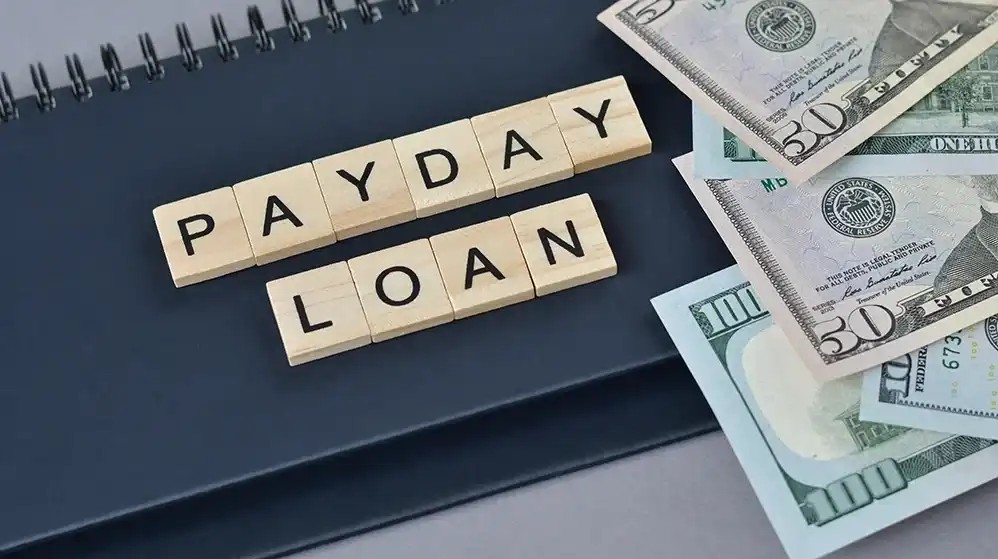
Payday loans offer fast access to cash — but the speed comes at a significant price that every borrower must understand before signing.
A payday loan is a small, short-term, unsecured loan — typically between $100 and $1,500 — designed to bridge the gap between now and your next paycheck. Unlike a personal loan or a credit card advance, a payday loan is not based on your credit score. Approval is usually fast, often within minutes, and requires little more than proof of a regular income source and an active checking account.
In exchange for that convenience and accessibility, payday loans charge fees that are dramatically higher than any other mainstream lending product. Those fees are not presented as an interest rate — they are typically framed as a flat fee per $100 borrowed — but when translated into an annual percentage rate, they reveal a cost structure that most borrowers do not fully grasp before signing.
Repayment Timeline
Payday loans are due in full — principal plus fees — on your next payday, typically within 14 to 30 days of origination. There is no monthly payment structure; the full balance is due at once.
Cost Structure
Lenders charge $10 to $30 per $100 borrowed, which sounds modest until you realise a two-week loan at $15 per $100 translates to an APR of roughly 390%. This is not a rate — it is a fee repeated every two weeks.
Qualification Requirements
Most payday lenders require only a government-issued ID, proof of regular income (pay stubs or bank statements), and an active checking account. Credit checks are often minimal or absent.
State Regulation Varies
Payday loan terms, fee caps, and even legality differ significantly by state. Some states prohibit payday lending entirely; others cap fees; others have minimal restrictions. Always verify your state's rules before applying.
The Real Cost of a Payday Loan
The most important number a payday loan borrower needs to understand is not the loan amount — it is the total repayment obligation and what happens to that obligation if repayment is delayed. Here is a concrete cost breakdown:
💡 Real-World Payday Loan Cost Example — $400 Borrowed at $20 per $100
| Original loan amount | $400.00 |
| Fees at $20 per $100 (×4) | $80.00 |
| Total due on payday (14 days) | $480.00 |
| Equivalent APR | ~521% |
| If rolled over once (additional fee) | +$80.00 = $560 still owed |
| If rolled over twice (fees only paid) | $240 in fees paid, still owe $400 principal |
"The payday loan is not inherently predatory — but used without full understanding of its cost structure and repayment terms, it can cause serious and lasting financial harm to people who can least afford it."
— Ping Tree Systems Financial Literacy Resource Guide, 2025
6 Questions to Ask Before You Borrow
These six questions function as a decision framework. If you cannot answer yes to all six, a payday loan is very likely not the right choice for your situation:
Is this expense genuinely unavoidable right now?
Ask whether delaying the expense by even one or two weeks would create serious, concrete consequences — not inconvenience, but real harm. A car repair that prevents you from getting to work qualifies. A discretionary purchase does not.
Have I exhausted every lower-cost option?
Before borrowing at payday loan rates, have you contacted your bank about a small personal loan, checked whether a credit card advance is available, asked your employer about a paycheck advance, or reached out to family? Payday lending should be the last option, not the first.
Can I repay the full amount — principal plus fees — from my next paycheck alone?
This is the most critical question. If repaying the loan in full would leave you without enough money to cover rent, groceries, or utilities, you will very likely need to roll it over — and that is when the cost structure becomes genuinely dangerous.
Do I understand the exact total I will owe on the due date?
Get the specific dollar amount in writing before signing. Not the fee rate — the total amount due, on the exact date it is due. If a lender is vague about this, walk away.
Am I borrowing the minimum amount I actually need?
Because fees are charged per $100 borrowed, borrowing $300 when you need $200 increases your fee by $10 to $30 for no reason. Borrow the exact amount required and not one dollar more.
Do I have a clear repayment plan that does not depend on borrowing again?
Rolling over a payday loan is the beginning of a cycle that many borrowers find extremely difficult to escape. If your repayment plan requires taking out another loan to cover this one, you are already in the cycle before you have started.
When a Payday Loan Actually Makes Sense
Payday loans have a legitimate but narrow use case. The conditions under which they can serve a borrower without causing lasting harm are specific:
- The amount needed is small — under $300 — so the absolute fee cost is low even at a high rate.
- The expense is a genuine emergency that cannot be deferred without serious consequences to employment, housing, or health.
- Repayment in full from the next paycheck is certain — not probable, not likely, but genuinely certain based on a predictable income source.
- Every lower-cost alternative has been tried and is not available in the timeframe required.
- The borrower is fully aware of the exact total cost in dollar terms, not just the fee rate.
The Debt Cycle Trap — and How to Avoid It
The most serious risk associated with payday loans is not the initial cost — it is the debt cycle that begins the moment a borrower cannot repay in full on the original due date. When that happens, most lenders offer a "rollover" or "renewal": you pay the interest and fees for the current term, and the loan is extended for another period. The principal does not decrease. You have simply paid to borrow the same money for another two weeks.
The Debt Cycle in Numbers: A borrower who takes a $300 payday loan and rolls it over six times pays approximately $270 in fees over three months — and still owes the original $300. At that point they have paid 90% of the loan's value in fees alone, without retiring the principal. This is not a hypothetical; it is the documented experience of a large share of payday loan borrowers who do not repay on the first due date.
Breaking the cycle requires either finding external funds to retire the principal in full, negotiating an extended repayment plan directly with the lender (which some states require lenders to offer), or working with a non-profit credit counselling service to create a structured repayment strategy.
Smarter Alternatives to Consider First
Every one of the following alternatives carries meaningfully lower costs and risks than a payday loan. Work through this list before concluding that a payday loan is your only option:
Personal Loan from Bank or Credit Union
Even borrowers with imperfect credit may qualify for a small personal loan from a credit union at APRs of 18%–36% — a fraction of payday loan rates. The application takes longer but the savings are substantial.
Credit Card Cash Advance
A cash advance on an existing credit card carries an APR of roughly 20%–30% and no fixed repayment deadline. Even with cash advance fees, the total cost is far lower than a two-week payday loan on equivalent amounts.
Employer Paycheck Advance
Many employers will advance a portion of earned wages upon request, with no fees or interest. This is the lowest-cost option when available, since you are simply accessing money you have already earned.
Family or Friends
Borrowing from a trusted person in your network at zero interest — with a written agreement and clear repayment timeline — eliminates all fees while preserving the relationship through transparency.
Non-Profit Credit Counselling
If the underlying problem is broader than a single emergency — ongoing cash-flow strain or existing debt — a non-profit credit counselling agency can create a structured debt management plan at low or no cost.
Earned Wage Access Apps
Apps like Earnin, Dave, and Brigit allow workers to access a portion of earned wages before payday for small flat fees — typically $1 to $5 — dramatically cheaper than payday loan fees on equivalent amounts.
How Ping Post Technology Connects Borrowers with Lenders
For borrowers who have worked through the decision framework and determined that a payday loan is the appropriate choice for their specific situation, accessing multiple lenders simultaneously — rather than applying one at a time — can improve both approval odds and loan terms. This is where Ping Tree Systems' payday ping post platform provides meaningful value.
How the Ping Post Process Works for Payday Applicants
When a borrower submits an application through a platform that uses Ping Tree Systems' lead distribution software, their information is processed in three automated stages:
The Ping — Simultaneous Matching
The applicant's anonymised qualifying data — loan amount, state, income range, employment status — is broadcast simultaneously to all lenders on the network whose acceptance criteria match the application profile. This happens within milliseconds of submission.
The Bid — Competitive Lender Response
Interested lenders respond in real time with their bid. The borrower's application goes to the lender offering the best combination of terms and bid price — creating competitive pressure that can benefit the applicant versus applying to a single lender.
The Post — Real-Time Delivery
The winning lender receives the complete application within seconds. The borrower is connected to an approved lender faster than sequential applications would allow — with full transparency about the lender's identity and specific terms before committing.
For Lenders: Ping Tree Systems' Payday Ping & Post platform delivers verified, real-time payday loan leads matched to your acceptance criteria — loan amount, state, income bracket, and employment type — directly to your CRM. Request a demo today →
Conclusion: Informed Borrowing Is the Only Safe Borrowing
A payday loan is a tool — and like any tool, its value depends entirely on whether it is used in the right situation and with full knowledge of how it works. Used correctly — for a small, unavoidable expense, with repayment certain from a single paycheck, after exhausting every lower-cost option — a payday loan can bridge a genuine gap without lasting consequences.
Used incorrectly — for a discretionary expense, in an amount that cannot be repaid in one cycle, without a clear exit plan — the same tool becomes a debt trap that costs far more than the original problem it was meant to solve. The decision framework in this guide exists to help you tell the difference clearly, before you sign.
Always read the full loan agreement before signing. Verify the exact repayment amount, the exact due date, the rollover fee if applicable, and the lender's policy on payment failures. If any term is unclear, ask — and if the lender will not clarify in writing, choose a different lender.
Frequently Asked Questions
A payday loan is a small, short-term, unsecured loan — typically between $100 and $1,500 — designed to be repaid in full on your next payday, usually within 14 to 30 days. Lenders require minimal documentation: typically a government-issued ID, proof of regular income such as pay stubs or bank statements, and an active checking account. Credit checks are often minimal or waived entirely. In exchange for this accessibility, lenders charge fees of $10 to $30 per $100 borrowed — which translate to annualised APRs of 300% to 521% or higher. The full repayment amount — principal plus all fees — is due in one lump sum on the agreed date, with no monthly instalment structure.
At a typical rate of $20 per $100 borrowed, a $300 payday loan costs $60 in fees, making the total repayment $360 due within 14 to 30 days. If you cannot repay in full and roll the loan over for one additional term, you pay another $60 in fees — bringing cumulative fees to $120 — while still owing the original $300 principal. After two rollovers you have paid $180 in fees and still owe $300. This escalation is why the CFPB and consumer advocacy groups consistently emphasise that payday loans should only be used when repayment from a single paycheck is certain. Borrowing $300 at credit union personal loan rates (around 18% APR) for 30 days, by comparison, costs approximately $4.50 in interest.
The debt cycle begins when a borrower cannot repay the full loan amount on the due date and instead pays only the interest and fees to roll the loan over for another term. Each rollover adds another round of fees without reducing the original principal at all. Borrowers who roll over repeatedly can pay more in cumulative fees than the original loan amount while still owing the full principal. The CFPB has found that more than 80% of payday loans are rolled over or renewed within 14 days, and that the majority of fees are paid by borrowers who end up in sequences of 10 or more loans. Avoiding the cycle requires only borrowing an amount you can repay in full from a single paycheck, building even a minimal emergency savings buffer, and exploring alternatives before reaching for a payday loan in the first place.
The best alternatives, ranked roughly from lowest to highest cost, are: drawing from an emergency savings account (zero cost); an employer paycheck advance on earned wages (usually zero cost); borrowing from family or friends with a written repayment agreement (zero or minimal cost); earned wage access apps like Earnin or Dave (flat fee of $1–$5 for equivalent amounts); a credit union or community bank personal loan (APR of 6%–36%); a credit card cash advance (APR of 20%–30% plus a cash advance fee); and non-profit credit counselling if the underlying problem is broader cash-flow strain or existing debt. Each of these options carries meaningfully lower total costs and debt-cycle risks than a payday loan on equivalent amounts.
When a borrower submits a payday loan application through a platform using Ping Tree Systems' distribution technology, the system broadcasts anonymised qualifying data — loan amount requested, state, income range, employment type — simultaneously to all lenders in the network whose acceptance criteria match the applicant's profile. This broadcast takes milliseconds. Interested lenders respond in real time with their bid, and the application is routed to the winning lender within seconds of submission. This process gives borrowers access to multiple potential lenders simultaneously rather than requiring sequential applications — improving both approval odds and the chance of receiving competitive terms. For lenders, the platform delivers high-intent, pre-matched applicants in real time, dramatically improving the efficiency of their acquisition process.
No — payday loan legality and regulation vary significantly by state. Some states, including New York, New Jersey, Pennsylvania, Massachusetts, and Vermont, effectively prohibit payday lending by capping interest rates so low that the payday model is not financially viable for lenders to operate. Other states permit payday loans but impose caps on fees, loan amounts, or the number of rollovers allowed. A smaller group of states have historically had minimal regulation, though federal CFPB oversight applies in all states. Before applying for a payday loan, always verify the legal status, fee caps, and maximum loan amount rules in your specific state — and be wary of online lenders claiming to operate outside state law, as this is a common characteristic of predatory or unlicensed operations.