

As concerns about climate change and rising energy costs grow, more homeowners and business owners are asking a very practical question: what can I actually do that makes a measurable difference? Among the available options, switching to solar energy remains one of the most effective, well-documented ways to cut carbon emissions at the household or business level — not as a symbolic gesture, but as a direct substitution for the fossil-fuel electricity that would otherwise power your home.
The logic is straightforward once you break it down. Most electricity grids in the United States still draw a significant share of their power from coal and natural gas plants, both of which release carbon dioxide and other greenhouse gases when they burn fuel to generate electricity. Every kilowatt-hour your solar panels produce is a kilowatt-hour that doesn't need to come from that grid mix — which means less fuel burned, less carbon released, and a smaller footprint for the building the panels sit on.
This guide breaks down exactly how solar energy reduces emissions, what the manufacturing and lifecycle tradeoffs really look like, and how the numbers compare against staying on a conventional fossil-fuel-powered grid.
Key Takeaway: Solar panels reduce your carbon footprint in two compounding ways — they displace electricity that would otherwise be generated by burning fossil fuels, and they generate that electricity right where it's used, avoiding the energy losses that happen when power travels long distances across transmission lines. Together, these effects make solar one of the highest-impact upgrades a homeowner or business can make.
Key Solar & Carbon Emissions Statistics
"The single biggest lever most households have over their personal carbon footprint isn't what they drive or what they eat — it's where their electricity comes from. Solar changes that answer permanently." — Ping Tree Systems Solar & Clean Energy Report
Seven Ways Solar Energy Cuts Your Carbon Footprint

Every kilowatt-hour generated on-site is a kilowatt-hour that doesn't need to come from fossil fuels.
Solar energy doesn't reduce emissions through a single mechanism — it works through several reinforcing effects that compound the longer a system stays in service. These are the seven that matter most:
Displacing Fossil-Fuel Electricity:
The most direct effect. Every kilowatt-hour your panels produce is one your utility doesn't need to generate by burning coal or natural gas, directly reducing the carbon dioxide released to power your home or business.
Reducing Transmission and Distribution Losses:
Electricity generated far away at a centralized power plant loses energy as it travels across transmission lines to reach your building. Rooftop solar generates power right where it's consumed, avoiding these losses almost entirely.
Providing an Infinite, Depletion-Free Resource:
Unlike coal, oil, or natural gas, sunlight is not a finite resource that requires extraction, transportation, or combustion — it can be captured indefinitely without depleting anything.
Encouraging Complementary Efficiency Upgrades:
Homeowners and businesses that invest in solar frequently pair the installation with insulation improvements, efficient appliances, and smart thermostats, compounding the emissions reduction well beyond the panels alone.
Driving Down Fossil Fuel Demand at Scale:
As more households and businesses adopt solar, aggregate demand for fossil-fuel-generated electricity falls, which puts downward pressure on the carbon intensity of the broader grid over time.
Improving with Every Technology Generation:
Panel efficiency has climbed steadily for over a decade, meaning each new generation of solar technology converts more sunlight into usable electricity per square foot — further improving the emissions-per-kilowatt-hour math.
Supporting Local Economies Alongside Emissions Reduction:
Solar installations create regional jobs in sales, installation, and maintenance, meaning the environmental benefit arrives alongside tangible local economic activity rather than displacing it.
Solar Manufacturing and Lifecycle Emissions, Explained
A fair conversation about solar and carbon has to address the manufacturing question directly: producing solar panels does require energy, and that energy currently comes from a mix of sources — some of it fossil-fuel-based. It's a legitimate consideration, and it's also one that the data resolves clearly in solar's favor.
Independent lifecycle studies consistently find that a solar panel "pays back" the carbon emitted during its manufacturing within a relatively short window of operation — typically a small fraction of its total productive lifespan. After that payback period, every additional kilowatt-hour the panel generates for the remainder of its 25-to-30-year life represents a net emissions reduction with no further carbon cost attached to the electricity itself.
The Result: Because a solar panel operates for decades after paying back its manufacturing footprint, the lifetime emissions per kilowatt-hour of solar electricity are a small fraction of the lifetime emissions per kilowatt-hour of electricity generated from coal or natural gas — even after accounting for manufacturing, transportation, and eventual end-of-life recycling.
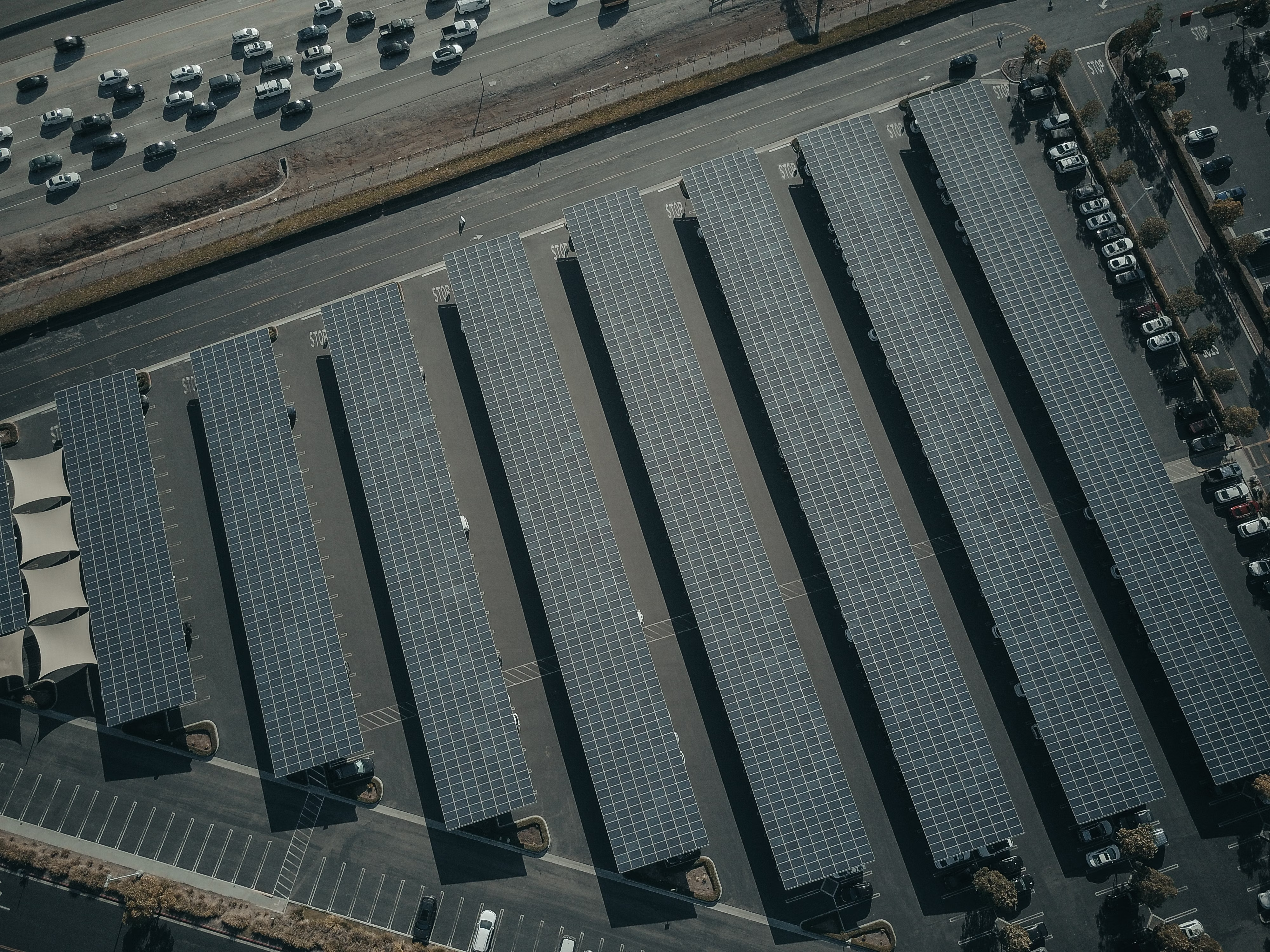
Solar's carbon advantage grows every year a system stays in operation.
Solar Power vs. Grid Electricity: Full Emissions Comparison
This table lines up conventional fossil-fuel-sourced grid electricity against solar-generated electricity across the dimensions that matter most when evaluating the environmental case for switching:
| Emissions Dimension | ❌ Conventional Grid Electricity | ✅ Rooftop Solar Energy |
|---|---|---|
| Operating Emissions | Continuous CO₂ released for every kilowatt-hour generated from coal or gas | Zero operating emissions once the system is installed |
| Fuel Source | Finite — requires ongoing extraction, transport, and combustion | Infinite — sunlight requires no extraction or transport |
| Transmission Losses | Energy lost as electricity travels from centralized plants to your building | Minimal — electricity is generated at the point of use |
| Manufacturing Footprint | Ongoing extraction and plant-operation emissions for the life of the facility | One-time footprint, repaid within a few years of operation |
| Lifetime Emissions per kWh | High and constant across the full operating life of the source | Sharply front-loaded, then near-zero for decades of use |
| Price Volatility | Subject to fuel-price swings and geopolitical supply shocks | Largely fixed once installed; no ongoing fuel cost |
| Local Economic Impact | Concentrated around centralized generation and extraction sites | Distributed installation and maintenance jobs in your region |
| System Lifespan | Plant infrastructure with high ongoing maintenance and fuel needs | 25–30 years of generation with minimal maintenance |
How to Start Reducing Your Footprint with Solar
Moving from interest to an actual reduction in your carbon footprint follows a fairly predictable sequence for most homeowners and businesses:
Assess Your Current Energy Use:
Review recent utility bills to understand your household or business's typical electricity consumption — this is the baseline a solar provider will use to size a system correctly.
Evaluate Your Roof or Property:
Sun exposure, roof angle, shading, and available space all affect how much of your electricity use solar can realistically offset. A site assessment from a qualified installer answers this quickly.
Compare Quotes from Verified Providers:
Pricing, equipment quality, and warranty terms vary meaningfully between installers, making it worth comparing multiple verified quotes before committing.
Understand Available Incentives:
Federal, state, and local incentives can meaningfully offset the upfront cost of a system — a reputable installer should walk you through what currently applies in your area.
Decide on Financing or Ownership Structure:
Outright purchase, financed ownership, and leasing arrangements all reduce your footprint differently in terms of long-term savings, so match the structure to your goals.
Install and Monitor Performance:
Once installed, most systems include monitoring tools that show real-time generation — letting you see, in kilowatt-hours and dollars, exactly how much fossil-fuel electricity you're displacing.
Who Benefits Most from Switching to Solar?
The environmental and financial case for solar plays out a little differently depending on the type of property and its energy profile:
The environmental and financial case for solar plays out a little differently depending on the type of property and its energy profile:
Homeowners with High Electricity Use
Households running central air, electric heating, or EV charging see the largest absolute emissions reduction, since solar directly offsets their largest electricity draws.
Businesses with Daytime Operations
Offices, retail locations, and warehouses that consume most of their electricity during daylight hours align naturally with solar generation, maximizing the share of demand offset without storage.
Properties in Carbon-Intensive Grid Regions
Homes and businesses located where the local grid still relies heavily on coal or natural gas see a proportionally larger emissions benefit per kilowatt-hour of solar generated than those in already-clean grid regions.
Conclusion: A Direct, Measurable Way to Cut Emissions
Reducing a carbon footprint can feel abstract when it's framed around habits and lifestyle choices. Solar energy is different — it's a concrete infrastructure change with numbers you can track on a monitoring dashboard. Every kilowatt-hour a solar system generates is a kilowatt-hour of fossil-fuel electricity that never gets burned, and that effect compounds year after year for the full operating life of the system.
For homeowners and businesses weighing where to focus their environmental efforts, few single decisions carry as much measurable, sustained impact as switching the source of the electricity powering the building itself.
Ready to Explore Solar for Your Home or Business? Ping Tree Systems' Solar Ping & Post platform connects you with verified solar providers matched to your area. Request a free demo today →
Frequently Asked Questions
A typical residential solar system offsets several tons of carbon dioxide per year by displacing electricity that would otherwise come from a fossil-fuel-powered grid. The exact figure depends on your system size, local sunlight levels, and the carbon intensity of your regional electricity mix — homes in areas with coal-heavy grids see a proportionally larger benefit per kilowatt-hour generated.
Manufacturing solar panels does create upfront emissions from mining, material processing, and factory operations. However, independent lifecycle studies consistently show that panels repay that initial carbon debt within just a few years of operation, then continue generating clean electricity with essentially no further emissions for the remaining two-plus decades of their operating life.
Yes. Panels generate reduced but still meaningful output on overcast days, since diffuse sunlight still reaches the panel surface. Any amount of solar generation directly displaces an equivalent amount of grid electricity that would otherwise be produced by burning fossil fuels, so even partial output still reduces your footprint relative to drawing fully from the grid.
Centralized power plants generate electricity that then travels across long transmission lines to reach homes and businesses, losing a portion of its energy along the way as heat. Rooftop solar generates electricity at the point of use — on your roof, feeding directly into your building — which avoids nearly all of that transmission loss and makes each unit of solar generation more efficient than the equivalent grid-delivered unit.
No. A standard grid-tied solar system reduces emissions immediately by offsetting the electricity you'd otherwise draw from the grid during daylight hours, which is when most residential and commercial demand overlaps with peak solar generation. Battery storage is a useful addition — it lets you store excess daytime solar for use after sunset — but it isn't required to start seeing a real reduction in your footprint.
Ping Tree Systems' Solar Ping & Post platform connects homeowners and businesses with verified solar providers matched to their specific service area, making it straightforward to compare quotes, equipment options, and financing terms before committing. You can explore options and request a demo at pingtreesystems.com/contact.